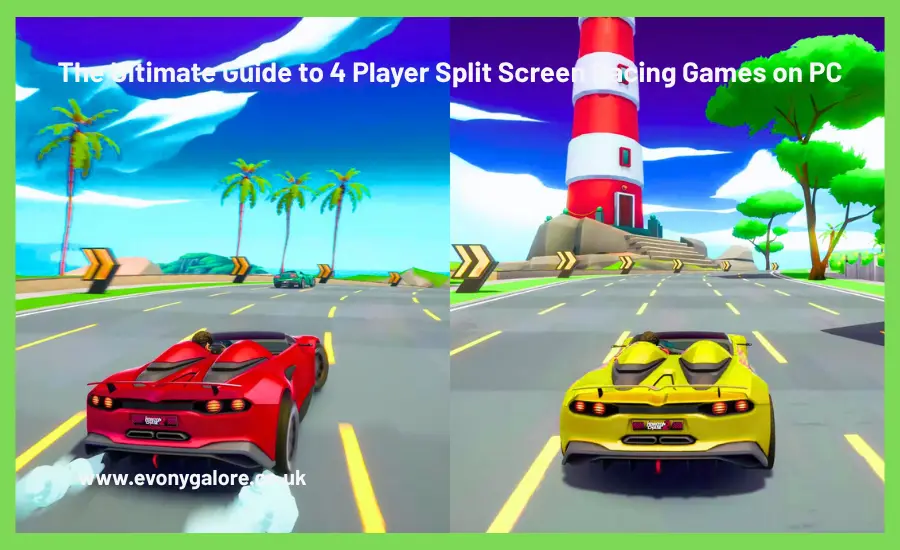
The Ultimate Guide to 4 Player Split Screen Racing Games on PC: Reviving Local Multiplayer Gaming
The resurgence of local multiplayer gaming has brought a renewed appreciation for split screen functionality, particularly in the racing game genre. While online multiplayer dominates the modern gaming landscape, there’s something uniquely exhilarating about gathering four friends around a single screen, controllers in hand, ready to compete in high-octane racing battles. The experience of hearing your friends’ reactions in real-time, the friendly trash talk, and the immediate gratification of victory makes 4 player split screen racing games on PC an irreplaceable form of entertainment. This comprehensive guide explores the best options available, technical considerations, and why this classic gaming format continues to thrive in an increasingly digital age.
Understanding the Appeal of Local Split Screen Racing
Local split screen racing represents more than just a gaming mode; it embodies a social experience that online multiplayer cannot fully replicate. When four players share the same physical space, the energy becomes palpable. The competitive atmosphere intensifies as players can see each other’s reactions, celebrate spectacular crashes, and experience the genuine camaraderie that comes from shared entertainment. This format eliminates the latency issues common in online play, ensuring every input registers instantly and every collision feels immediate and satisfying.
The PC platform, traditionally associated with single-player or online multiplayer experiences, has witnessed a renaissance in split screen support. Developers have recognized that despite the prevalence of online gaming, there remains substantial demand for local multiplayer options. This recognition has led to both indie developers and major studios implementing robust split screen functionality in their racing titles. The technical capabilities of modern PCs, with their powerful graphics processors and ability to maintain high frame rates even when rendering multiple viewports simultaneously, make them ideal platforms for split screen gaming experiences.
Furthermore, split screen racing games serve as perfect entertainment for various social gatherings, from casual game nights to competitive tournaments among friends. They require minimal setup compared to arranging multiple gaming stations, and they foster an inclusive environment where everyone participates in the same experience simultaneously. The barrier to entry is lower, as only one copy of the game and one gaming system are needed, making it economically accessible for friend groups looking to enjoy racing games together.
Top 4 Player Split Screen Racing Games for PC
Trackmania Turbo: Arcade Perfection
Trackmania Turbo stands as one of the most accessible and entertaining split screen racing experiences available on PC. This arcade-style racing game abandons realistic physics in favor of pure, unadulterated fun. The game features over two hundred tracks across four distinct environments, each offering unique visual aesthetics and gameplay challenges. The split screen implementation is exceptionally well-optimized, maintaining smooth performance even when four players are simultaneously navigating the game’s increasingly complex track designs.
What distinguishes Trackmania Turbo from competitors is its emphasis on time trials and track completion rather than direct competitive racing. While players can compete against each other, the primary focus remains on mastering the perfect racing line and executing flawless runs. This design philosophy reduces the frustration that can come from aggressive player-versus-player competition while maintaining the competitive spirit. The game’s track editor adds tremendous replay value, allowing players to design custom courses specifically tailored for split screen sessions. The intuitive controls make it accessible to newcomers while offering sufficient depth to satisfy experienced racing game enthusiasts.
Sonic & All-Stars Racing Transformed: Kart Racing Evolution
Sonic & All-Stars Racing Transformed elevates the kart racing formula by transforming vehicles that adapt to changing track conditions. This title supports four player split screen and brings together characters from various SEGA franchises, creating a nostalgic yet fresh racing experience. The transformation mechanic, which sees vehicles convert between cars, boats, and planes depending on the track surface, adds strategic depth absent from many kart racers. Each character possesses unique handling characteristics and special abilities, encouraging players to experiment with different racers to find their preferred playstyle.
The track design in Sonic & All-Stars Racing Transformed demonstrates exceptional creativity, with courses that dynamically change between laps. What begins as a straightforward street race might transform into an aerial dogfight or aquatic chase, keeping all players engaged and preventing races from becoming predictable. The power-up system balances offensive and defensive options, ensuring that races remain competitive without becoming frustratingly random. Split screen performance remains stable throughout, even during the most chaotic moments when all four players are unleashing special abilities simultaneously. The game also includes various game modes beyond standard races, including battle arenas and time trials, providing variety for extended play sessions.
Split/Second: Velocity: Explosive Competition
Split/Second: Velocity introduces a revolutionary mechanic to arcade racing games through its power play system. Players build up a meter by performing drifts, drafting, and catching air, which they can then spend to trigger environmental destruction that affects the race. These power plays range from minor obstacles like explosive barrels to massive events that fundamentally alter the track layout. In four player split screen mode, this creates moments of spectacular chaos as players strategically deploy destruction to impede opponents while navigating the havoc others have unleashed.
The game’s eleven unique tracks are meticulously designed to showcase the destruction mechanics, with every environment containing numerous interactive elements. The split screen implementation cleverly manages the visual intensity, ensuring that even when multiple players trigger major destruction sequences simultaneously, the frame rate remains playable. The tension escalates as races progress, with more powerful destruction options becoming available, making the final laps particularly intense. The game rewards both offensive aggression and defensive anticipation, as skilled players learn to predict when opponents will trigger power plays and position themselves accordingly. This strategic layer, combined with solid arcade racing fundamentals, creates an experience that remains engaging through countless play sessions.
Grid Autosport: Simulation Meets Accessibility
For players seeking a more simulation-oriented split screen racing experience, Grid Autosport delivers authentic motorsport action while maintaining accessibility for casual players. The game features multiple racing disciplines including touring cars, endurance racing, open-wheel formula cars, street racing, and tuner competitions. Each discipline offers distinct handling characteristics and strategic considerations, providing substantial variety for four player sessions. The split screen mode accommodates different skill levels through comprehensive difficulty options and driving assists, allowing mixed-ability groups to compete fairly.
Grid Autosport’s damage system adds consequence to aggressive driving, as sustained contact and collisions affect vehicle performance. This discourages reckless behavior while maintaining the thrilling intensity of close-quarters racing. The AI drivers in mixed-mode sessions, where fewer than four human players compete, demonstrate sophisticated behavior that keeps races competitive without feeling artificially challenging. The game includes an extensive selection of real-world circuits and fictional street courses, each requiring different racing approaches. Career mode progression translates well to multiplayer sessions, as players can select from increasingly powerful and specialized vehicles as they advance, adding long-term goals beyond individual race victories.
Essential Technical Considerations for Split Screen Racing
Hardware Requirements and Performance Optimization
Running four player split screen racing games requires more computational resources than single-player experiences since the system must render four separate viewpoints simultaneously. The GPU bears the primary burden, as it processes four distinct camera angles and renders the game world from each perspective. Modern mid-range graphics cards generally handle split screen racing adequately, but optimal experiences require more powerful hardware. An NVIDIA GTX 1660 or AMD RX 580 represents the minimum recommended specification for smooth four-player split screen at 1080p resolution with medium settings across most titles.
CPU performance becomes particularly relevant in split screen scenarios, as the processor must handle physics calculations, AI opponents, and game logic for all four players concurrently. Quad-core processors with decent single-thread performance suffice for most racing games, though six-core or eight-core CPUs provide headroom for maintaining consistent frame rates during intense moments with multiple vehicles on screen. RAM requirements increase modestly for split screen, with 16GB representing a comfortable minimum that prevents performance degradation during extended sessions.
Monitor resolution and size significantly impact the split screen experience. While 4K displays provide sharper imagery, they demand substantially more GPU power when rendering four viewports. For most setups, 1080p or 1440p displays strike the optimal balance between visual quality and performance. Screen size matters considerably for player comfort, as each player receives roughly one-quarter of the display area. Monitors below 32 inches can cause eye strain during extended sessions, while displays between 40 and 55 inches provide ideal viewing experiences for four player configurations. Some groups even use projectors or large televisions to maximize screen real estate for each player.
Controller Configuration and Input Management
Proper controller setup is fundamental to enjoyable split screen racing experiences. Unlike keyboard and mouse gaming, which generally accommodates only one or two players comfortably, split screen racing demands four functional controllers. Xbox controllers offer the most seamless compatibility with Windows, featuring native driver support and nearly universal game recognition. PlayStation controllers work effectively through Steam’s controller configuration tools or dedicated software like DS4Windows, though they may require additional setup compared to Xbox peripherals.
Many quality third-party controllers provide cost-effective alternatives for groups that need multiple gamepads. Brands like 8BitDo, PowerA, and Logitech offer controllers with varying features and price points. When selecting controllers for split screen gaming, prioritize build quality and button responsiveness over advanced features like gyroscopic controls or touchpads, which racing games rarely utilize. Wireless controllers eliminate cable clutter but require regular charging or battery replacements, whereas wired controllers guarantee uninterrupted sessions at the cost of managing multiple cables.
Controller assignment can occasionally present technical challenges, particularly in games without robust input management systems. Windows sometimes reassigns controller numbers when devices are connected in different orders or after system restarts. Steam’s Big Picture mode provides helpful controller configuration tools that allow remapping inputs and ensuring proper player assignment. Before beginning split screen sessions, verify that each controller responds correctly and is assigned to the intended player, as reconfiguring mid-race interrupts gameplay flow and diminishes the experience.
Finding Your Perfect Match
| Game Title | Racing Style | Difficulty Curve | Vehicle Variety | Track Quantity | Unique Features | Best For |
| Trackmania Turbo | Arcade | Moderate to Difficult | Low (standardized vehicles) | 200+ | Track editor, precision racing | Time trial enthusiasts, creative players |
| Sonic & All-Stars Racing Transformed | Kart Racing | Easy to Moderate | High (20+ characters) | 20+ transforming tracks | Vehicle transformation, dynamic tracks | Casual groups, kart racing fans |
| Split/Second: Velocity | Arcade | Moderate | Moderate (12 vehicles) | 11 destructible tracks | Environmental destruction, power plays | Action-oriented players |
| Grid Autosport | Simulation-Arcade | Moderate to Difficult | Very High (100+ vehicles) | 100+ circuits | Multiple racing disciplines, damage system | Motorsport enthusiasts |
| Beach Buggy Racing | Casual Kart | Easy | Moderate (15+ vehicles) | 15 tracks | Power-ups, simple controls | Family gaming, younger players |
| F1 Race Stars | Kart Racing | Easy to Moderate | Moderate (Formula 1 themed) | 11 circuits | KERS boost system, licensed F1 content | Formula 1 fans, accessible competition |
Maximizing Your Split Screen Racing Experience
Room Setup and Seating Arrangements
Creating an optimal physical environment enhances split screen gaming sessions considerably. Seating arrangement should position all four players at roughly equal distances from the screen, ensuring no one gains an unfair advantage through superior viewing angles or closer proximity. Semi-circular or straight-line seating configurations work best, avoiding situations where players must view the screen at extreme angles. For displays mounted at standard desk height, ensure seating allows all players’ eye levels to align roughly with the screen’s vertical center, reducing neck strain during extended sessions.
Lighting conditions affect both gameplay performance and player comfort. Avoid positioning the display where windows or lamps create glare on the screen surface, as reflections can obscure portions of split screen quadrants. Ambient lighting at moderate levels prevents eye fatigue better than playing in complete darkness, though lights should not create bright spots on the screen. Consider the room temperature as well, since having four people and gaming equipment in proximity generates substantial heat, particularly during extended sessions. Adequate ventilation maintains comfort and prevents gaming hardware from thermal throttling.
Audio configuration deserves attention in split screen scenarios. While headphones provide optimal sound separation for online gaming, split screen benefits from shared audio through speakers or a sound system. This creates a communal atmosphere and allows players to hear environmental audio cues and music together. Position speakers to provide balanced audio coverage for all players rather than favoring those seated directly in front of them. Volume should be sufficient for game audio to be clearly audible without overwhelming conversation between players, as verbal interaction constitutes a core component of the split screen experience.
Establishing House Rules and Fair Competition
Competitive balance ensures all players enjoy split screen sessions, regardless of skill disparities. For groups with mixed experience levels, implement handicap systems such as requiring experienced players to use lower-tier vehicles or disabling certain assists for skilled racers while leaving them active for beginners. Many racing games include built-in difficulty options and assist toggles that help level the playing field without making victories feel unearned or defeats feel unfair.
Establishing clear rules about acceptable competitive behavior prevents disputes and maintains friendly atmospheres. Decide whether aggressive driving tactics like intentional ramming or blocking are permissible or prohibited. Some groups embrace chaotic, anything-goes racing, while others prefer clean competition where contact is discouraged. Neither approach is inherently superior, but having agreed-upon standards prevents mid-session arguments that can sour the experience. Consider implementing penalty systems for repeated rule violations, such as starting from the back of the grid in subsequent races.
Tournament structures add long-term engagement to split screen sessions. Rather than playing disconnected individual races, organize championship seasons where points accumulate across multiple events. This rewards consistency over single-race performance and creates narrative arcs as players battle for overall supremacy. Varying the tracks and game modes within tournaments maintains freshness and tests different aspects of racing skill. Consider implementing special event rules for certain races, such as reverse track directions, weather conditions, or restricted vehicle classes, to break up potential monotony during extended play sessions.
The Future of Split Screen Racing on PC
The gaming industry’s renewed interest in local multiplayer suggests a promising future for split screen racing games on PC. Developers increasingly recognize that not all players prefer online competitive experiences, and substantial audiences exist for couch multiplayer gaming. This recognition drives both established franchises and innovative indie titles to include robust split screen functionality. Technical advancements in graphics card technology and game engine optimization make it increasingly feasible to maintain visual quality and performance even when rendering multiple viewports simultaneously.
Cross-platform play between PC and consoles represents another frontier that could enhance split screen racing experiences. As platform barriers erode, games that support split screen locally while also enabling online play with users on different systems could create hybrid experiences where local groups compete against other local groups globally. This combines the social benefits of in-person gaming with the competitive variety of online matchmaking. Several racing games have begun exploring these possibilities, though widespread implementation remains in development.
Virtual reality introduces intriguing questions about the evolution of local multiplayer racing. While current VR technology focuses primarily on single-player experiences, future developments might enable new forms of shared gaming where some players use VR headsets while others participate via traditional split screen, all within the same race. Such implementations remain speculative but demonstrate how emerging technologies might expand rather than replace traditional split screen gaming. Regardless of technological evolution, the fundamental appeal of gathering friends for shared entertainment experiences ensures that 4 player split screen racing games will remain relevant for years to come.
Conclusion
Four player split screen racing games on PC represent more than nostalgic throwbacks to earlier gaming eras; they provide genuinely superior social experiences that online multiplayer cannot replicate. The immediacy of shared physical space, the energy of real-time reactions, and the inclusive nature of local multiplayer create memorable gaming sessions that strengthen friendships and build lasting memories. Whether you prefer the accessibility of kart racers like Sonic & All-Stars Racing Transformed, the explosive spectacle of Split/Second, the precision challenges of Trackmania Turbo, or the simulation depth of Grid Autosport, excellent options exist for every preference and skill level.
Successful split screen racing requires consideration of both technical and social factors. Adequate hardware ensures smooth performance across all four viewports, while proper controllers guarantee responsive and reliable input for every player. Physical environment optimization, from screen size to seating arrangements, significantly impacts player comfort and engagement. Establishing fair competitive frameworks and house rules maintains friendly atmospheres while preserving competitive intensity. As the gaming industry continues recognizing the value of local multiplayer, PC gamers can anticipate even more high-quality split screen racing options in the coming years, ensuring this classic gaming format thrives alongside modern online experiences.