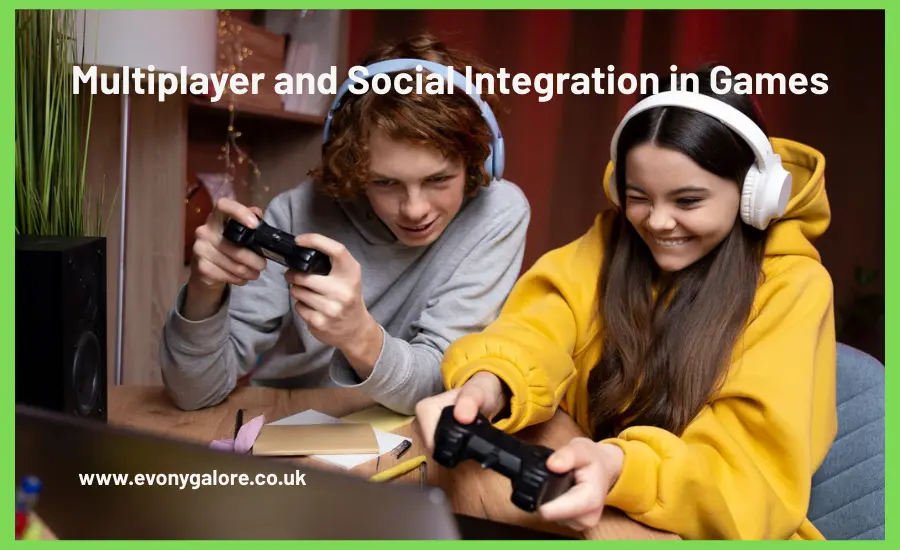
Multiplayer and Social Integration in Games: Reshaping the Future of Interactive Entertainment
The gaming industry has undergone a profound transformation over the past two decades, evolving from isolated single-player experiences into vibrant, interconnected social ecosystems. Multiplayer and social integration in games have become fundamental pillars of modern game design, fundamentally changing how players interact, compete, and build communities within virtual worlds. This evolution reflects broader shifts in digital culture, where connectivity and shared experiences have become paramount to user engagement and satisfaction.
The integration of social features into gaming platforms has transcended simple competitive matchmaking, creating complex networks of social interaction that rival traditional social media platforms in their sophistication and user engagement. From cooperative gameplay mechanics to integrated voice chat systems, from friend lists to clan management tools, the social infrastructure of modern games has become as important as the core gameplay itself. This comprehensive exploration examines the multifaceted nature of multiplayer and social integration in games, analyzing their impact on player behavior, community formation, game design philosophy, and the broader entertainment landscape.
- The Evolution of Multiplayer Gaming: From LAN Parties to Cloud-Based Experiences
- Core Components of Social Integration in Contemporary Games
- The Psychology of Social Gaming: Why We Play Together
- Designing for Social Interaction: Best Practices and Challenges
- Monetization and Social Integration: The Business of Connected Gaming
- The Impact of Streaming and Content Creation on Social Gaming
- Cross-Cultural Considerations in Global Multiplayer Environments
- The Future of Social Integration: Emerging Technologies and Trends
- Conclusion: The Social Future of Interactive Entertainment
The Evolution of Multiplayer Gaming: From LAN Parties to Cloud-Based Experiences
The journey of multiplayer gaming began in humble settings, with early pioneers gathering in physical spaces to connect computers via local area networks. The LAN party culture of the 1990s and early 2000s represented the first significant wave of social gaming, where titles like Quake, Counter-Strike, and StarCraft brought players together for marathon sessions of competitive play. These gatherings required substantial technical knowledge and logistical coordination, limiting multiplayer experiences to dedicated enthusiasts who could overcome the technological barriers of the era.
The advent of broadband internet fundamentally altered this landscape, democratizing access to multiplayer experiences and enabling developers to create persistent online worlds. Massively multiplayer online games like World of Warcraft demonstrated the commercial viability of sustained social engagement, with millions of subscribers forming guilds, participating in raids, and building lasting friendships within virtual realms. The success of these early online communities established a blueprint for social integration that continues to influence game design today. The transition from client-server architectures to cloud-based gaming infrastructure has further reduced barriers to entry, enabling seamless cross-platform play and allowing players to maintain their social connections regardless of their chosen hardware.
Modern multiplayer frameworks leverage sophisticated matchmaking algorithms that consider not only player skill levels but also behavioral patterns, connection quality, and even time-zone compatibility. These systems aim to create balanced, enjoyable experiences while minimizing toxic behavior and promoting positive social interactions. The implementation of skill-based matchmaking, while sometimes controversial within competitive communities, reflects a broader industry commitment to accessibility and player retention through carefully managed social experiences.
Core Components of Social Integration in Contemporary Games
Essential Social Features That Define Modern Gaming:
- Friend Systems and Social Graphs: Comprehensive contact management that tracks relationships across multiple games and platforms, enabling players to maintain connections within expansive gaming ecosystems
- Party and Squad Formation: Intuitive group creation tools that facilitate coordinated play, complete with voice chat integration and shared progression systems
- Guild and Clan Infrastructure: Organizational frameworks that support large-scale community management, including hierarchical permissions, shared resources, and collective achievement tracking
- In-Game Communication Tools: Multi-layered communication systems encompassing text chat, voice chat, emotes, and contextual quick-chat options designed for rapid coordination
- Activity Feeds and Social Timelines: Notification systems that keep players informed about friend activities, achievements, and community events
- Spectator and Streaming Integration: Built-in tools for broadcasting gameplay and watching others, transforming gaming into a participatory spectator sport
The sophistication of these features has reached a point where many games function as social platforms first and entertainment products second. Games like Fortnite and Roblox have pioneered this approach, creating virtual spaces where social interaction often takes precedence over traditional gameplay objectives. These platforms host concerts, movie screenings, and social gatherings, blurring the boundaries between gaming and broader social networking. The integration of user-generated content systems within these social frameworks has created self-sustaining creative economies where players become content creators, further deepening their investment in the platform.
Cross-platform social integration represents one of the most significant recent advances in gaming infrastructure. The ability to maintain friendships and participate in multiplayer experiences regardless of whether players are using consoles, PCs, or mobile devices has broken down historical barriers that fragmented gaming communities. This technological achievement required unprecedented cooperation between platform holders and represents a fundamental shift in industry priorities toward player convenience and social connectivity.
The Psychology of Social Gaming: Why We Play Together
Understanding the psychological drivers behind social gaming reveals why multiplayer and social integration have become so central to the medium. Human beings are fundamentally social creatures, and games that successfully tap into our need for connection, recognition, and belonging create powerful engagement loops that extend far beyond the intrinsic appeal of gameplay mechanics. Social comparison theory plays a crucial role in competitive multiplayer environments, where players derive satisfaction not just from personal achievement but from their relative standing within a community. Leaderboards, ranking systems, and visible achievement displays satisfy our desire for social recognition while providing clear goals that drive continued engagement.
Cooperative gameplay taps into different psychological rewards, fostering feelings of camaraderie and shared accomplishment that create lasting emotional bonds between players. Research in positive psychology has demonstrated that shared challenging experiences create stronger social connections than casual interactions, explaining why raid groups in MMORPGs and competitive teams in esports often develop tight-knit communities that extend beyond the game itself. The concept of social presence, the degree to which players feel they are genuinely interacting with other human beings rather than artificial entities, significantly impacts engagement and satisfaction. Games that successfully create strong social presence through expressive avatars, responsive communication systems, and meaningful cooperative mechanics generate deeper player investment and longer retention periods.
The role of social capital in gaming communities cannot be overstated. Players accumulate social capital through skill demonstration, helpful behavior, leadership roles, and community contributions. This accumulated capital provides tangible benefits within game communities, including access to exclusive groups, respect from peers, and influence over community norms. The pursuit and maintenance of social capital creates powerful incentives for continued engagement and prosocial behavior, functioning as an informal governance system that shapes community culture.
Designing for Social Interaction: Best Practices and Challenges
Creating effective social integration requires deliberate design choices that balance accessibility with depth, freedom with structure, and competition with cooperation. Successful social game design begins with reducing friction in social discovery and connection formation. Players should be able to easily find compatible teammates, join communities aligned with their interests, and communicate effectively without technical barriers. Interface design plays a crucial role here, with intuitive friend management systems, streamlined party creation, and context-sensitive communication tools making social interaction feel natural rather than burdensome.
Progression systems in socially integrated games must account for both individual and collective achievement. Games like Destiny 2 and Sea of Thieves implement shared progression systems where group activities contribute to both personal and collective goals, creating alignment between individual player motivations and group success. This design approach reduces tension between personal advancement and social obligation, making cooperative play feel rewarding rather than sacrificial. The implementation of social incentives, such as bonuses for playing with friends or rewards for helping newer players, can significantly influence player behavior and foster positive community cultures.
However, social integration also introduces significant design challenges, particularly around managing toxic behavior and maintaining healthy community environments. The anonymity and distance provided by online interactions can sometimes encourage negative behaviors that players would avoid in face-to-face settings. Effective moderation systems must balance automated detection with human judgment, providing tools for players to self-regulate communities while maintaining oversight to prevent serious abuse. Reputation systems, honor ratings, and behavioral matchmaking represent attempts to create self-reinforcing positive feedback loops where constructive behavior is rewarded, and toxic behavior naturally leads to social isolation.
The challenge of accessibility in socially integrated games extends beyond technical barriers to include social anxiety and inclusivity concerns. Not all players are comfortable with voice communication or competitive social environments, yet these players still deserve access to the benefits of multiplayer experiences. Thoughtful design includes robust ping systems for non-verbal communication, matchmaking options that accommodate different playstyles and communication preferences, and single-player or smaller-scale alternatives to large group content. Games like Apex Legends have pioneered context-aware communication systems that allow effective coordination without requiring voice chat, demonstrating that accessibility and depth need not be mutually exclusive.
Monetization and Social Integration: The Business of Connected Gaming
The business models surrounding multiplayer and social integration have evolved into sophisticated ecosystems that generate billions in annual revenue. Free-to-play models have become dominant in the multiplayer space precisely because they maximize network effects—the value of a multiplayer game increases exponentially with its player population, making accessibility more important than upfront revenue. These models typically monetize through cosmetic items, battle passes, and seasonal content that allow players to express individuality within social contexts. The visibility of purchased items to other players transforms cosmetics from simple personalizations into social signals, status indicators that communicate wealth, dedication, or aesthetic sensibility.
Social features themselves have become revenue drivers, with games monetizing through clan advancement systems, premium social spaces, and exclusive community features. Some games offer subscription services that provide social benefits such as private servers, additional character slots for playing with different friend groups, or priority matchmaking. The intersection of social integration and monetization raises important ethical considerations, particularly around creating pressure to purchase through social comparison or gating social features behind paywalls. Responsible monetization in socially integrated games should enhance rather than restrict social interaction, providing optional enhancements without creating pay-to-participate barriers.
| Monetization Strategy | Social Integration Element | Player Impact | Revenue Potential |
| Cosmetic Microtransactions | Avatar customization, visible to other players | High (social expression) | Very High |
| Battle Passes | Seasonal progression shared with friends | Medium (collective goals) | High |
| Premium Subscriptions | Enhanced social features, private servers | Medium (convenience) | Medium |
| User-Generated Content Sales | Community-created items and experiences | High (creative expression) | Variable |
| Competitive Entry Fees | Tournament participation, ranked modes | Low (skill demonstration) | Medium |
The phenomenon of “whales”—players who spend disproportionately large amounts on free-to-play games—is often driven by social factors rather than gameplay advantages. These high-spending players frequently cite social status, supporting creators they admire, or enhancing experiences for their friend groups as primary motivations. Understanding these social drivers has led developers to create increasingly sophisticated systems for recognizing and rewarding high engagement, both social and financial.
The Impact of Streaming and Content Creation on Social Gaming
The rise of streaming platforms like Twitch and YouTube Gaming has fundamentally altered the social dynamics of multiplayer games, creating parasocial relationships between content creators and audiences while transforming skilled players into influential celebrities. This streaming ecosystem has become inseparable from multiplayer gaming culture, with many games designed specifically for “streamability” creating moments of excitement, surprise, or humor that translate well to passive viewing. The integration of streaming features directly into games, such as Twitch drops, streamer-specific game modes, and built-in broadcasting tools, acknowledges the symbiotic relationship between content creation and player engagement.
Content creators function as community leaders and taste-makers, their preferences and playstyles influencing millions of viewers’ gaming choices and behaviors. Game developers increasingly collaborate with prominent streamers for launch events, beta testing, and community feedback, recognizing their unique position as intermediaries between developers and player communities. This relationship has democratized influence within gaming culture, where charisma and entertainment value can matter as much as traditional industry credentials. The social integration features that support content creation, such as replay systems, photo modes, and clip-sharing functionality, have become essential components of modern multiplayer games.
Cross-Cultural Considerations in Global Multiplayer Environments
The global nature of modern multiplayer gaming creates unprecedented opportunities for cross-cultural interaction while simultaneously presenting challenges around cultural differences, language barriers, and varying social norms. Games that successfully navigate these complexities implement region-specific servers that reduce latency while allowing opt-in cross-regional play for players seeking international experiences. Localization extends beyond simple translation to include culturally appropriate social features, moderation policies that account for regional differences in acceptable discourse, and awareness of local regulations regarding online interaction and data privacy.
Cultural differences in communication styles, competitive attitudes, and social hierarchies can create friction in international gaming communities. Some cultures emphasize individual achievement and direct communication, while others prioritize group harmony and indirect expression. Effective social integration accommodates these differences through flexible communication tools, culturally-aware moderation, and education resources that help players navigate cross-cultural interactions respectfully. The most successful global gaming communities develop their own hybrid cultures, blending elements from different regions into unique social ecosystems that transcend geographic boundaries.
The Future of Social Integration: Emerging Technologies and Trends
The trajectory of multiplayer and social integration points toward increasingly immersive, persistent, and boundary-dissolving experiences. Virtual reality and augmented reality technologies promise to enhance social presence dramatically, enabling body language, spatial audio, and shared physical-seeming spaces that more closely approximate in-person interaction. Platforms like VRChat already demonstrate the potential for VR to create profound social connections, with users reporting meaningful friendships and even romantic relationships formed entirely within virtual environments. The integration of haptic feedback, eye tracking, and facial expression capture will further deepen the sense of genuine human connection within digital spaces.
Artificial intelligence is poised to transform social gaming through more sophisticated matchmaking, intelligent moderation that can detect nuanced toxic behavior, and AI companions that can fill social roles when human players are unavailable. Machine learning algorithms can analyze communication patterns to identify harassment before it escalates, predict player churn based on social disconnection, and suggest compatible players based on communication style rather than just skill level. The ethical implications of AI-mediated social interaction require careful consideration, particularly around privacy, manipulation, and the authenticity of social experiences.
The concept of the metaverse, much discussed in recent years, represents the logical endpoint of current social integration trends persistent, interoperable virtual worlds where social identity transcends individual games and platforms. While fully realized metaverse visions remain aspirational, elements are already emerging through cross-game progression systems, unified social graphs that span multiple titles, and virtual economies with real-world value. Blockchain technology and NFTs, despite current controversies, may eventually enable true digital ownership and portable identity across gaming platforms, though significant technical and regulatory challenges remain.
Conclusion: The Social Future of Interactive Entertainment
Multiplayer and social integration in games have evolved from optional features into foundational elements that define the medium’s cultural significance and commercial success. The transformation of games into social platforms reflects broader societal shifts toward digital-first social interaction while creating unique spaces for connection, competition, creativity, and community. As technology advances and cultural attitudes toward digital relationships continue evolving, the boundary between “gaming” and “social networking” will likely blur further, creating hybrid experiences that serve multiple human needs simultaneously.
The responsibility that comes with creating these powerful social systems cannot be understated. Developers must balance engagement optimization with player well-being, monetization with accessibility, and freedom of expression with community safety. The most successful socially integrated games will be those that recognize players as whole people seeking meaningful connections rather than simply metrics to be optimized. As we look toward the future, the continued innovation in multiplayer and social integration promises to create experiences that bring people together across boundaries of geography, culture, and circumstance, fulfilling gaming’s unique potential as a medium for shared human experience.