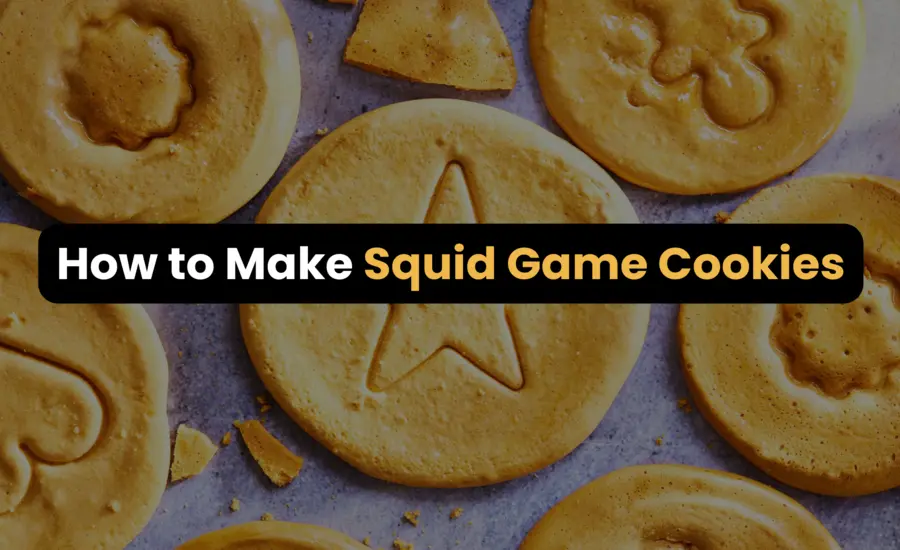
How to Make Squid Game Cookies: The Complete Guide to Dalgona Candy
Introduction
The global phenomenon “Squid Game” captivated audiences worldwide with its intense storyline and memorable challenges. Among these challenges, perhaps none became as instantly iconic as the dalgona candy game from the third episode, where contestants had to carefully carve out shapes from a delicate honeycomb cookie without breaking it. This seemingly innocent childhood treat transformed into a nerve-wracking test of precision and patience within the context of the show. In the aftermath of the series’ release, “Squid Game cookies” surged in popularity across social media platforms, with millions attempting to recreate these traditional Korean treats at home, testing their own dexterity against the clock.
Dalgona candy, also known as ppopgi (뽑기) in Korea, has a rich cultural history dating back to the 1960s and 1970s when it became a beloved street food, particularly popular among schoolchildren. Vendors would create these caramelized sugar treats on the spot, pressing shapes into the warm candy and challenging children to extract the shape without breaking. Successful attempts were often rewarded with a free candy. This nostalgic confection experienced a remarkable global renaissance following Squid Game’s release, introducing millions of people worldwide to this simple yet fascinating Korean cultural tradition.
This comprehensive guide will walk you through everything you need to know about creating perfect dalgona candy at home. We’ll explore the historical context of this traditional Korean treat, break down the fundamental ingredients and techniques required for successful preparation, offer troubleshooting advice for common challenges, and provide creative variations to experiment with once you’ve mastered the basics. Whether you’re preparing for a Squid Game-themed party, looking to challenge friends and family to this deceptively difficult cookie game, or simply wanting to experience this unique confection for yourself, this article will equip you with the knowledge and skills to create authentic, Instagram-worthy dalgona candy from the comfort of your own kitchen.
The Cultural Significance of Dalgona Candy
Long before “Squid Game” brought dalgona candy to international attention, ppopgi held a special place in Korean cultural memory. The sweet treat emerged as a popular street food in post-war Korea, during a time when affordable luxuries were few and far between. Street vendors would set up portable stalls equipped with small burners, where they would melt sugar and baking soda to create this caramelized confection on the spot. The interactive element challenging children to extract embedded shapes without breaking them, added a layer of excitement and turned the simple treat into a memorable experience.
The significance of dalgona candy extends beyond mere confectionery; it represents a distinct era in Korean history and evokes powerful nostalgia for many Koreans who grew up playing the ppopgi challenge. The treat’s resurgence through “Squid Game” reconnected many Korean adults with cherished childhood memories while simultaneously introducing this cultural touchstone to a global audience. The simplicity of dalgona candy made from just sugar and baking soda also reflects the resourcefulness and creativity that characterized South Korea during its rapid economic development period.
Interestingly, before “Squid Game” sparked worldwide interest, dalgona candy had already experienced a domestic revival in Korea during the late 2010s, with traditional vendors seeing renewed attention from younger generations seeking a connection with this aspect of their cultural heritage. Traditional dalgona vendors, some of whom have been making the candy for decades, became living preservers of this culinary tradition, often gaining recognition on social media and in food-focused television programs. The global explosion of interest following “Squid Game” further cemented dalgona candy’s cultural significance, transforming it from a locally cherished tradition to an internationally recognized symbol of Korean culture.
The candy’s distinctive honeycomb pattern, created by the reaction between melted sugar and baking soda, produces not only a visually appealing treat but also a unique eating experience with its crisp, airy texture that melts in the mouth. This textural experience, combined with the skill-testing challenge aspect, creates a multisensory engagement that transcends language barriers, perhaps partially explaining why the dalgona challenge sequence in “Squid Game” resonated so powerfully with viewers worldwide despite cultural differences.
Essential Ingredients for Authentic Dalgona Candy
The beauty of dalgona candy lies in its remarkable simplicity. Unlike many confections that require numerous ingredients and precise measurements, authentic dalgona candy needs just two main components: sugar and baking soda. However, this simplicity is somewhat deceptive, as the quality of these ingredients and the precise execution of the cooking process significantly impact the final result.
Granulated white sugar forms the foundation of dalgona candy. While regular white sugar works perfectly well, some candy-making enthusiasts prefer using pure cane sugar for its slightly different melting properties and flavor profile. The quantity of sugar determines the size of your dalgona candy. Typically, one tablespoon of sugar produces a cookie approximately 2-3 inches in diameter, which is the standard size seen in “Squid Game” and traditionally sold by Korean street vendors. For beginners, it’s advisable to start with smaller quantities of sugar (perhaps 1-2 tablespoons per cookie) as larger amounts can be more challenging to work with and require more consistent heat distribution.
Baking soda (sodium bicarbonate) serves as the crucial second ingredient that transforms melted sugar into the characteristic honeycomb structure that defines dalgona candy. When added to hot, melted sugar, baking soda releases carbon dioxide, creating tiny bubbles throughout the mixture. These bubbles give dalgona candy its distinctive airy, crisp texture and slightly golden color. The ratio of baking soda to sugar is critical; too little will result in dense, hard candy lacking the proper honeycomb structure, while too much can create an unpleasantly bitter taste. The ideal proportion is approximately 1/8 teaspoon of baking soda for each tablespoon of sugar used.
Beyond these two essential ingredients, you may also want to have vegetable oil or cooking spray on hand. While not incorporated into the candy itself, a light coating of oil on your working surface and tools prevents the sticky candy from adhering where it shouldn’t, making the entire process significantly more manageable. Some modern variations incorporate food coloring or flavoring agents such as vanilla extract, cocoa powder, or fruit essences, but these are not components of traditional dalgona candy and may change the candy’s behavior during preparation.
For shaping and pressing the traditional designs into your dalgona candy, you’ll need appropriate tools. Traditionally, Korean street vendors use specially designed metal presses with various shapes. However, for home preparation, small cookie cutters, decorative measuring spoons, or even uniquely shaped bottle caps can serve as effective alternatives. Additionally, you’ll need a flat, heat-resistant pressing tool; the bottom of a measuring cup or a wide, flat spoon works well for this purpose.
Required Tools and Equipment
Creating dalgona candy at home requires relatively simple equipment, most of which you likely already have in your kitchen. However, having the right tools properly prepared will make the difference between a frustrating experience and successful, professional-looking results. Here’s a comprehensive breakdown of the essential equipment needed:
A reliable heat source forms the foundation of successful dalgona candy preparation. Traditionally, Korean street vendors use small portable burners that provide consistent, controllable heat. In a home kitchen, a gas stovetop offers similar advantages with its visible flame and quick adjustability. However, electric or induction stovetops can also work well once you become familiar with their heating patterns. Regardless of the heat source, medium-low to medium heat generally works best for melting sugar without burning it. High heat can cause the sugar to scorch before it properly melts.
For melting the sugar, you’ll need an appropriate vessel. A small, heavy-bottomed stainless steel ladle has traditionally been the tool of choice for dalgona vendors, as it allows for direct heating of small quantities of sugar, optimal heat control, and easy pouring. If you don’t have a metallic ladle suitable for direct heat exposure, a small, heavy-bottomed saucepan or even a metal measuring cup can serve as an alternative. Non-stick coatings should be avoided as they aren’t designed for the high temperatures required for sugar caramelization and may release harmful compounds when overheated.
Once the sugar has caramelized and been mixed with baking soda, you’ll need a proper surface for shaping and flattening the candy. Traditionally, street vendors use small metal plates or trays, but at home, a baking sheet lined with parchment paper, a silicone baking mat, or even a lightly oiled piece of aluminum foil works well. The key requirement is that the surface be heat-resistant, as you’ll be placing very hot candy on it, and non-stick, as the candy becomes extremely adhesive while still warm.
For pressing the candy into its characteristic flat shape, you’ll need a flat, heat-resistant tool. The bottom of a measuring cup, a spatula, a flat-bottomed glass, or a specially purchased candy press all work well for this purpose. Whatever tool you choose should be lightly oiled to prevent sticking and sturdy enough to apply even pressure without bending.
The most distinctive element of dalgona candy is, of course, the impressed shape that creates the challenge. Small metal cookie cutters in simple geometric shapes work exceptionally well. The shapes featured in “Squid Game”, circle, triangle, star, and umbrella, have become particularly popular, but any simple design with clean lines will work. After impressing the shape, you’ll need a thin implement for the actual extraction challenge. Traditionally, a sewing needle is used, but a toothpick, a thin skewer, or even a fine-tipped paring knife can serve the purpose.
Timing is critical when working with hot sugar, so having a heat-resistant spatula for mixing and a reliable timer nearby is advisable. Additionally, since melted sugar can cause severe burns, heat-resistant gloves provide an extra layer of safety, particularly for beginners. A cooling rack allows your finished candies to cool quickly and evenly, preserving their texture and making them easier to handle.
Step-by-Step Preparation Guide
Creating perfect dalgona candy requires precision, timing, and careful attention to detail. This step-by-step guide breaks down the entire process into manageable segments, from preparation to the finished product. Follow these instructions carefully to achieve authentic, professional-looking results:
Preparation Phase
Before beginning the actual cooking process, proper preparation is essential. Start by gathering all necessary ingredients and equipment, ensuring everything is within easy reach. Once the sugar starts melting, the process moves quickly and requires your full attention. Prepare your work surface by lining a heat-resistant area with parchment paper, a silicone mat, or lightly oiled aluminum foil. Have your shape cutters and pressing tools ready and lightly coated with cooking oil to prevent sticking.
Measure your ingredients precisely. For each cookie, you’ll need approximately one tablespoon of granulated sugar and 1/8 teaspoon of baking soda. While these proportions can be scaled up if you’re making multiple cookies simultaneously, beginners should start with single cookies until they develop a feel for the process. Place the sugar in easily accessible small containers and the baking soda in separate containers to facilitate quick addition when needed.
Consider the placement of your tools strategically. The heat source, sugar, stirring implement, baking soda, working surface, and pressing tools should be arranged in a logical sequence that allows for smooth transitions between steps. Remember that once the sugar melts, you’ll have limited time to complete subsequent actions before the mixture cools and hardens.
Cooking Process
Begin by heating your ladle or small saucepan over medium-low heat. Once the vessel is warm, add the tablespoon of sugar. The key here is patience, resist the urge to increase the heat to speed up the process, as this dramatically increases the risk of burning the sugar. Maintain a steady, moderate heat and watch closely as the sugar begins to melt. Initially, it will clump together, then gradually transform into a clear liquid. This process typically takes 2-3 minutes, depending on your heat source and the quantity of sugar.
As the sugar melts, you may notice areas melting faster than others. Use a heat-resistant stirring implement to gently move unmelted sugar into melted areas, ensuring even caramelization. The sugar should progress from clear to a light amber color. This stage is critical for developing the proper flavor and structure. Be vigilant, as the transition from perfectly caramelized to burnt happens rapidly, often within seconds.
Once all the sugar has melted and achieved a uniform amber color, remove it from the heat source and immediately add the baking soda. Using your stirring implement, quickly but thoroughly fold the baking soda into the melted sugar. The mixture will foam up dramatically and lighten in color as carbon dioxide bubbles form throughout the mixture. This reaction creates the characteristic honeycomb structure. Aim to incorporate the baking soda fully without overmixing, which can deflate the bubbles you’re trying to create.
Shaping and Molding
Immediately after incorporating the baking soda, pour the foamy mixture onto your prepared surface. The candy will be extremely hot and malleable for only a brief window of time, so work quickly but methodically. Using your lightly oiled pressing tool, flatten the candy into a circle approximately 3-4 inches in diameter and 1/8 to 1/4 inch thick. Apply firm, even pressure to create a uniform thickness this evenness is crucial for successfully extracting shapes later.
While the candy is still warm and pliable, gently press your chosen shape cutter into the center of the disc, applying enough pressure to make a clear impression without cutting entirely through the candy. The ideal depth is approximately halfway through the thickness of the candy, deep enough to create a visible outline but not so deep that it compromises the structural integrity of the surrounding candy.
After impressing the shape, allow the candy to cool completely before attempting any extraction. Patience at this stage is essential; premature handling can deform the candy or cause it to crack unpredictably. The cooling process typically takes 5-10 minutes, depending on the thickness of your candy and ambient temperature. You’ll know the candy is ready when it no longer feels warm to the touch and has developed a firm, rigid consistency.
The Extraction Challenge
Once the candy has fully cooled and hardened, the famous dalgona challenge can begin. Using a fine-pointed implement like a needle or toothpick, carefully trace along the impressed lines of your shape. The goal is to gradually separate the shape from the surrounding candy without causing cracks or breaks. Work methodically around the entire perimeter of the shape before attempting to remove any sections.
The traditional technique involves supporting the candy with one hand while working from the center of the shape outward with your extraction tool. Apply minimal pressure, let the tool do the work rather than forcing it. In the authentic “Squid Game” challenge, contestants had 10 minutes to extract their shapes, which reflects the delicate balance of speed and precision required.
If you’re creating these candies for a game or challenge, establish clear rules about what constitutes a “successful” extraction. Typically, the shape must be removed completely intact, with the surrounding frame also remaining whole. However, for casual enjoyment, even partially successful extractions still yield a delicious treat regardless of the aesthetic outcome.

Advanced Techniques and Variations
Once you’ve mastered the basic dalgona candy recipe, you can explore various techniques and creative variations that elevate this simple treat to new heights. From flavor innovations to presentation enhancements, these advanced approaches allow you to customize your dalgona experience while retaining the essential characteristics that make this confection special.
Flavor Innovations
Traditional dalgona candy features the natural caramel flavor that emerges from melted sugar, complemented by the slightly alkaline taste from baking soda. However, subtle flavor modifications can create interesting variations without compromising the candy’s structure. One approach involves incorporating powdered flavorings into the baking soda before adding it to the melted sugar. Vanilla powder, freeze-dried fruit powder, matcha powder, or cocoa powder can all impart subtle flavor notes while maintaining the chemical reaction necessary for the honeycomb texture.
For more pronounced flavor profiles, consider infusing the finished candy with essences. After the candy has cooled but before attempting shape extraction, brushing the underside with food-grade essential oils or flavor extracts creates an aromatic dimension that enhances the eating experience. Popular options include citrus essences, rose water, almond extract, or mint extract. Apply sparingly, as the porous structure of dalgona candy readily absorbs these concentrated flavors.
Some experimental candy makers have explored substituting alternative sweeteners for standard granulated sugar. Brown sugar creates a deeper, more molasses-like flavor profile but requires careful heat management to prevent burning. Honey can be used partially (blended with regular sugar) to introduce floral notes, though pure honey presents challenges due to its different chemical composition and burning temperature. These substitutions typically require adjustments to cooking temperatures and times, making them better suited for those with established candy-making experience.
Visual Enhancements
Beyond the traditional golden-brown appearance, dalgona candy can be visually transformed through thoughtful modifications. Adding food coloring during the baking soda incorporation stage creates vibrant, colorful variations. Gel-based food colorings work best as they don’t introduce excessive moisture. Consider matching colors to shapes (red for hearts, green for trees) or creating themed color schemes for holidays or special events.
Layering techniques can create striking visual effects. By preparing multiple small batches of differently colored or flavored dalgona mixtures and pouring them in quick succession, you can achieve striped or marbled effects. This approach requires exceptional timing and coordination, as each layer must be poured while previous layers remain warm enough to bond but cool enough to maintain separation.
Surface decorations add another dimension of visual appeal. Once the candy has cooled slightly but remains somewhat tacky, applying edible gold or silver leaf creates a luxurious appearance. Alternatively, a light dusting of edible luster dust, freeze-dried fruit powder, or even crushed cookie crumbs can enhance both visual appeal and flavor complexity. For special occasions, edible printed rice paper can be carefully applied to the surface of the warm candy, creating custom designs or messages.
Structural Variations
While the traditional thin disc shape is iconic, structural variations offer interesting alternatives. Three-dimensional dalgona creations can be achieved by quickly shaping the warm mixture over curved surfaces like the bottom of a bowl or using silicone molds designed for chocolate work. The resulting domed or molded shapes provide new textures and experiences while retaining the characteristic honeycomb interior.
Filled dalgona presents an advanced technique where a small amount of complementary filling, such as chocolate ganache, nut butter, or fruit gel, is carefully placed in the center of the candy before it fully hardens. This creates a surprising textural and flavor contrast when the candy is broken or bitten into. Success with this technique requires precise timing and temperature management to ensure the filling remains contained without compromising the candy’s structure.
“Sandwich” or layered constructions combine dalgona candy with complementary elements, such as placing a thin dalgona sheet between chocolate layers or incorporating it into more complex desserts. The dalgona component provides a distinctive crunch and honeycomb flavor that pairs well with creamy or rich elements. When incorporating dalgona into larger dessert constructions, it’s important to add it shortly before serving, as the candy can absorb moisture from surrounding ingredients and lose its characteristic crispness.
Innovative Presentation Ideas
Beyond the candy itself, creative presentation enhances the dalgona experience. Consider serving dalgona candy with complementary dipping elements dark chocolate, fruit coulis, or flavored whipped cream, allowing guests to customize their tasting experience. For “Squid Game”-themed events, presenting the candy on numbered plates with appropriate utensils creates an immersive recreation of the show’s famous challenge.
Interactive dalgona stations, where guests can observe the candy-making process or even participate in creating their own, provide entertainment beyond the finished product. Equipping such stations with various shape cutters, colored sugars, and flavor options allows for personalized creations while sharing the fascinating chemistry and cultural context of this special treat.
For gifting purposes, properly packaged dalgona candy can maintain its quality for 1-2 weeks if protected from humidity. Individual candies can be wrapped in waxed paper and placed in airtight containers with desiccant packets to extend shelf life. Decorative packaging with information about the candy’s cultural significance and the extraction challenge instructions makes for a unique and educational gift.
Troubleshooting Common Challenges
Even experienced candy makers encounter challenges when creating dalgona candy. Understanding the science behind common issues and knowing how to address them can save both ingredients and frustration. This section addresses the most frequent problems, their causes, and practical solutions to help you achieve consistent success.
Issue: Sugar Burning Before Fully Melting
This common problem occurs when heat distribution is uneven or the heat source is too intense. You might notice dark brown or black spots forming in some areas while other parts of the sugar remain unmelted. Burnt sugar develops a bitter taste that permeates the entire candy and cannot be salvaged.
Solution: Always use medium-low to medium heat and a heavy-bottomed cooking vessel that distributes heat evenly. Gently stir the sugar occasionally as it melts to promote uniform caramelization. If you notice some areas beginning to darken prematurely, briefly remove the pan from the heat while continuing to stir, allowing the residual heat to melt the remaining sugar more gradually. Consider using a slightly larger cooking vessel that allows the sugar to spread in a thinner layer for more even melting.
Issue: Candy Lacking Proper Honeycomb Structure
If your dalgona candy appears dense, hard, and lacks the characteristic airy, honeycomb interior texture, the problem typically lies with either insufficient baking soda or improper incorporation. The honeycomb structure forms when carbon dioxide bubbles created by the baking soda reaction are trapped as the mixture cools and hardens.
Solution: Ensure your baking soda is fresh and active; older baking soda may have reduced leavening power. Maintain the proper ratio of approximately 1/8 teaspoon of baking soda per tablespoon of sugar. When incorporating the baking soda, fold it into the melted sugar quickly but thoroughly, ensuring it’s evenly distributed throughout the mixture. The color should lighten noticeably, and the volume should increase substantially. If the mixture isn’t foaming adequately, the sugar may have cooled too much before adding the baking soda, or the baking soda might be old and less reactive.
Issue: Candy Too Brittle or Shattering When Pressed
Excessive brittleness makes shape extraction nearly impossible, as the candy breaks unpredictably rather than along the intended lines. This typically occurs when the sugar is caramelized too darkly or when the candy is rolled too thin during the shaping process.
Solution: Remove the melted sugar from the heat when it reaches a light to medium amber color rather than dark amber. Darker caramelization creates harder, more brittle candy. When pressing the candy, aim for a thickness of about 1/8 to 1/4 inch; thinner candies become excessively fragile. Allow the candy to cool slightly before attempting to press it flat, as this gives the structure time to stabilize. Consider using a press with a larger surface area that distributes pressure more evenly during flattening.
Issue: Candy Too Sticky or Not Setting Properly
If your candy remains tacky or doesn’t fully harden, humidity is the most likely culprit. Sugar is hygroscopic, meaning it attracts and absorbs moisture from the air, which can prevent proper setting, especially in humid environments.
Solution: Create a lower-humidity workspace by running an air conditioner or dehumidifier if possible. Work on dry days rather than rainy ones if you have the option. Use slightly higher caramelization temperatures (being careful not to burn the sugar) as this reduces the candy’s hygroscopic properties. Once formed, immediately move candies to an airtight container with a desiccant packet if they will not be consumed right away. If you live in a particularly humid climate, consider adding a tiny pinch of cream of tartar to the sugar before melting. This ingredient helps stabilize the sugar and makes it less susceptible to moisture absorption.
Issue: Shape Impression Too Deep or Too Shallow
The depth of the impressed shape significantly impacts the extraction challenge. If pressed too deeply, the surrounding candy may crack prematurely; if too shallow, the outline may be unclear and difficult to follow during extraction.
Solution: Apply controlled, even pressure when creating the shape impression. The ideal depth is approximately halfway through the thickness of the candy. Allow the candy to cool slightly (about 30 seconds after pouring) before impressing the shape. This gives the structure time to set marginally while remaining malleable enough to accept a clean impression. If using cookie cutters, mark the halfway point on the cutter with a small piece of tape as a visual guide to avoid pressing too deeply. For more precise control, consider using specialized dalgona press tools that are designed to create consistent impressions.
Issue: Uneven Thickness in Finished Candy
Uneven thickness creates weak spots and makes successful shape extraction challenging. Some areas may be too thin and fragile, while others remain thick and difficult to separate cleanly.
Solution: Use a pressing tool with a flat, smooth bottom surface. Apply pressure from the center outward in a circular motion to encourage even distribution of the mixture. If you notice the candy is setting unevenly, quickly adjust by applying additional gentle pressure to thicker areas. Working on a completely flat, level surface is essential; even slight tilts can cause the warm mixture to flow unevenly before setting. For more consistent results, consider using a circle guide (like a round cookie cutter) placed on your working surface before pouring the mixture. This creates a boundary that helps maintain uniform thickness throughout.
Health Considerations and Dietary Adaptations
While dalgona candy is primarily an occasional treat rather than a dietary staple, understanding its nutritional profile and potential adaptations can help consumers make informed choices. This section explores the health aspects of traditional dalgona candy and offers possible modifications for various dietary preferences and restrictions.
Nutritional Profile
Traditional dalgona candy consists almost exclusively of sugar with a minimal amount of baking soda, making it essentially pure carbohydrate. A standard-sized cookie (made from one tablespoon of sugar) contains approximately 50-60 calories, all derived from refined sugar. The glycemic impact is high due to the readily available simple carbohydrates, causing a rapid blood sugar increase when consumed. The candy contains no significant amounts of protein, fat, vitamins, or minerals.
From a dental health perspective, the sticky nature of dalgona candy can be problematic as it adheres to teeth, potentially contributing to decay if proper oral hygiene isn’t maintained after consumption. The hard texture also presents a potential risk for dental damage if bitten incorrectly. For these reasons, moderation is advisable, particularly for children and those with dental concerns.
Despite these considerations, dalgona candy’s role in Korean culture exemplifies the concept of “occasional treats” rather than everyday foods. When enjoyed as part of a balanced lifestyle and consumed mindfully, these traditional sweets provide cultural connection and sensory pleasure without significant health concerns for most individuals.
Adaptations for Dietary Restrictions
Sugar Alternatives: For those monitoring sugar intake or with diabetes, creating authentic dalgona candy presents challenges, as the chemical properties of refined sugar are essential to the traditional preparation method and texture. However, some candy makers have experimented with partial substitutions:
- Erythritol and allulose show the most promise among sugar alternatives, as they can caramelize somewhat similarly to sugar, though with different melting temperatures and browning characteristics.
- Blends containing 50% sugar and 50% erythritol produce a honeycomb structure with approximately half the sugar content of traditional recipes.
- Pure sugar-free versions remain challenging, as most sugar alternatives don’t create the necessary chemical reaction with baking soda to produce the honeycomb structure.
Vegan Considerations: Traditional dalgona candy is naturally vegan, containing only sugar and baking soda without animal-derived ingredients. However, those following a vegan lifestyle should be aware that some commercial white sugars are processed using bone char filtration. To ensure completely vegan dalgona candy, select organic sugar or brands specifically labeled as vegan.
Allergen-Free Options: The basic dalgona recipe is free from major allergens, including nuts, dairy, eggs, wheat, soy, and shellfish. However, when creating flavored variations, be mindful of potential allergen introduction through added ingredients such as nut extracts or flavor powders. For public events or when preparing for those with severe allergies, clearly label any modifications that introduce potential allergens.
Low-FODMAP Adaptations: For individuals following a low-FODMAP diet to manage irritable bowel syndrome or similar digestive conditions, traditional dalgona candy may be problematic due to its high sugar content. While small portions might be tolerated by some, others may need to limit or avoid this treat. Currently, there are no satisfactory low-FODMAP substitutions that maintain the authentic dalgona experience.
Mindful Consumption Approaches
Rather than focusing solely on ingredient substitutions, many nutritionists and cultural food advocates recommend maintaining authenticity while adjusting portion size and consumption frequency. Creating mini dalgona candies (using 1/2 tablespoon of sugar per piece) allows for the full traditional experience with reduced sugar content per serving. Pairing dalgona candy with protein-containing foods can help moderate blood sugar impact for sensitive individuals.
For educational settings or family activities, the dalgona-making process provides valuable opportunities to discuss food culture, moderation, and the role of traditional treats in balanced eating patterns. The technical skill and patience required to extract the shapes successfully naturally extend the experience beyond mere consumption, creating mindfulness around the treat that may enhance satisfaction with smaller portions.
Squid Game Cookie Challenge: Hosting Your Own Event
The dalgona challenge featured in “Squid Game” provides a perfect framework for entertaining and engaging events. From birthday parties to team-building exercises, this section offers comprehensive guidance for hosting your own Squid Game cookie challenge, complete with setup instructions, rule variations, and thematic elements that capture the excitement without the high stakes of the fictional version.
Event Planning and Setup
Successful dalgona challenge events require thoughtful preparation and organization. Begin planning at least a week, considering your venue’s suitability for both candy-making and the challenge itself. Ideal locations have sufficient table space, good ventilation, and surfaces that can withstand potential sugar spills. For larger groups, establish separate stations for candy creation and challenge execution to maintain efficient flow.
Create a detailed shopping list including ingredients for candies (allowing 1-2 tablespoons of sugar per participant per round), shape cutters in varying difficulty levels, extraction tools (toothpicks work well for groups), and any thematic decorations. For events exceeding 20 participants, consider pre-making some candies to reduce wait times, though having some made fresh adds to the immersive experience.
Develop a clear timeline for your event, allocating time for explanation of rules, demonstration of technique, the challenge itself, and recognition of winners. For most groups, the entire experience takes 45-90 minutes, depending on participant numbers and whether you’re making candies on-site. Prepare information cards explaining the cultural significance of dalgona candy and its connection to the show to enhance educational value while participants wait for their turns.
Rules and Challenge Structure
Establish clear, consistent rules before beginning the challenge. In the most authentic format, participants select one of four shapes (triangle, circle, star, or umbrella) without knowing the difficulty level, just as in the show. Alternatively, for more balanced competition, assign shapes based on age or experience level, with younger children receiving simpler shapes like circles while adults tackle the notorious umbrella.
Set an appropriate time limit based on your audience. 10 minutes mirrors the show’s challenge, but 5 minutes creates more excitement for experienced participants, while 15 minutes may be better for children or first-timers. Provide each participant with one dalgona candy and a single extraction tool, typically a needle or toothpick. Standard rules prohibit breaking the shape or the outer circle, with participants “eliminated” if either breaks during extraction.
For family-friendly events, consider implementing a points system rather than elimination. Award full points for perfect extractions, partial points for minor breaks, and token participation points for attempts resulting in major breaks. This approach keeps everyone engaged throughout the event while still recognizing skillful performances.
Thematic Elements and Variations
Enhance immersion through thoughtful incorporation of “Squid Game” thematic elements. Consider providing numbered bibs or wristbands to participants, playing the show’s recognizable background music during the challenge, or having organizers dress in pink jumpsuit-inspired attire. For corporate events, these elements can be adjusted to align with company colors or themes while maintaining the core challenge concept.
Create different difficulty tiers or rounds to extend engagement. Begin with simpler shapes and progress to more complex designs in later rounds. For advanced challenges, introduce environmental factors like mild time pressure, distractions, or team-based competitions where members must each successfully extract different shapes to achieve group victory.
Age-appropriate variations ensure everyone can participate meaningfully. For very young children (under 6), consider pre-scoring the shapes to make extraction easier or using playdough versions that eliminate both sugar consumption and frustration. For seniors or those with dexterity challenges, provide magnifying glasses and supportive surfaces that stabilize the candy during extraction.
Prizes and Recognition
Develop creative reward systems that honor successful participants. Authentic prizes might include additional dalgona candies, small gift cards, or thematic souvenirs. For competitive events, consider a “champion’s cookie,” a specially decorated dalgona with a particularly challenging shape that only finalists attempt to extract.
Recognition beyond physical prizes enhances the experience. Create a “Wall of Victory” where successful extractions are displayed or photographed, or award humorous certificates like “Steadiest Hands” or “Most Creative Extraction Technique.” For recurring events, establish a leaderboard tracking the most difficult shapes successfully extracted or fastest completion times across multiple sessions.
For corporate team-building, connect the experience to workplace skills by recognizing parallels between successful extractions and valuable professional attributes like patience, precision, strategic thinking, and grace under pressure. This framing transforms a simple game into a meaningful metaphor that participants carry back to their work environment.
Squid Game’s Role in Cultural Transmission
The global success of “Squid Game” in late 2021 catapulted dalgona candy from relative international obscurity to worldwide recognition virtually overnight. The show’s dalgona challenge sequence particularly resonated with viewers for several reasons: the visual distinctiveness of the honeycomb cookies, the universal understanding of the precision challenge despite language or cultural barriers, and the high-stakes dramatic tension created by the game’s consequences.
Within weeks of the show’s release, social media platforms exploded with viewer attempts at creating dalgona candy and attempting the extraction challenge. Video platforms like TikTok and YouTube featured countless tutorials, challenge attempts, and reaction videos centered around dalgona candy, driving global awareness beyond the show’s direct viewership. Google search trends showed unprecedented spikes for terms like “dalgona candy,” “ppopgi,” and “honeycomb toffee” in countries where such searches had previously been negligible.
This virality translated into real-world impact as well. Korean restaurants and cafes worldwide reported surging demand for authentic dalgona candy, with some establishments creating dedicated “Squid Game experience” events featuring the dalgona challenge. Traditional dalgona vendors in Korea experienced remarkable business revivals, with some reporting hours-long lines and the need to increase production tenfold to meet demand. Several long-retired vendors even returned to the profession, finding renewed appreciation for their specialized skills.
Cultural Exchange and Authenticity
The global dalgona phenomenon represents an interesting case study in cultural exchange in the digital age. Unlike many instances of cultural appropriation where traditions are commercialized without context or attribution, dalgona candy’s popularity came with explicit acknowledgment of its Korean origins through direct reference to the source material. This connection facilitated genuine interest in the broader context of Korean street food culture and traditional confectionery techniques.
Food anthropologists note that dalgona candy’s global spread maintained remarkable fidelity to authentic preparation methods. Unlike other foods that adapt significantly when adopted internationally, dalgona candy’s simple ingredients and distinctive preparation process remained largely unchanged across cultural boundaries. This preservation of authenticity stems partly from the visual medium of “Squid Game” itself, which demonstrated the preparation process clearly, and partly from the technical requirements necessary to achieve the proper honeycomb structure.
The dalgona phenomenon also illustrates how fictional media can revitalize cultural traditions in their original countries. Many Korean cultural commentators have noted how “Squid Game’s” international success renewed domestic interest in traditional games and foods that had been fading from popular consciousness. This “reflected appreciation” effect, where external admiration increases internal cultural valuation, has been observed with other traditional practices highlighted in globally successful Korean media, suggesting a complex relationship between international pop culture success and domestic cultural preservation.
Conclusion:
The global fascination with dalgona candy extends far beyond its brief spotlight in “Squid Game,” revealing deeper connections to universal experiences of childhood, challenge, and cultural exchange. This simple confection, created from just sugar and baking soda, demonstrates how traditional foods can transcend their original context to become vehicles for shared human experiences across geographic and cultural boundaries.
The appeal of dalgona candy lies in its multisensory engagement. Visually, the golden honeycomb structure catches light in captivating ways. Texturally, the crisp shattering gives way to a melting sweetness that creates a distinctive eating experience. The process of making dalgona provides auditory and olfactory pleasure through the bubbling transformation and caramel aroma. Most significantly, the extraction challenge engages our tactile sense and tests our patience and precision in a way few other foods do. This full sensory involvement explains why dalgona resonates so deeply compared to passive consumption experiences.
From an educational perspective, dalgona candy offers accessible entry points to diverse learning domains. Children and adults alike discover basic principles of chemistry through the caramelization and carbon dioxide reaction. The extraction challenge develops fine motor skills and patience. The cultural history connects us to specific times and places in Korean society, while the physics of structural integrity and controlled fracture illustrate scientific concepts through direct experience. Few traditional foods so elegantly combine pleasure and learning potential.
As “Squid Game” eventually fades from cultural prominence, dalgona candy seems positioned to retain its newly established global recognition. Street vendors in Korea report sustained interest beyond the initial surge, while educational programs increasingly incorporate dalgona candy as both a cultural lesson and a science demonstration. The candy’s simplicity, distinctive character, and interactive challenge component ensure it offers something unique in the vast landscape of global confectionery traditions.
Perhaps most importantly, dalgona candy reminds us how shared food experiences connect us across differences. When people in Brazil, Nigeria, Australia, and countless other locations engage with this specific Korean tradition, learning its techniques, appreciating its cultural context, and experiencing the universal challenge of precise extraction, they participate in a form of cultural exchange that builds understanding rather than erasing differences. In a world often divided by misunderstanding, such small moments of shared experience contribute meaningfully to cross-cultural appreciation.
Whether you approach dalgona candy as a nostalgic reminder of childhood, a challenging game of skill, a scientific demonstration, or simply a delicious treat, its journey from post-war Korean streets to global popularity demonstrates how traditional foods carry meanings far beyond their ingredients. By mastering the techniques shared in this guide, you not only create a distinctive sweet treat but also connect yourself to this remarkable cultural phenomenon that continues to delight people worldwide with its golden, honeycomb magic.