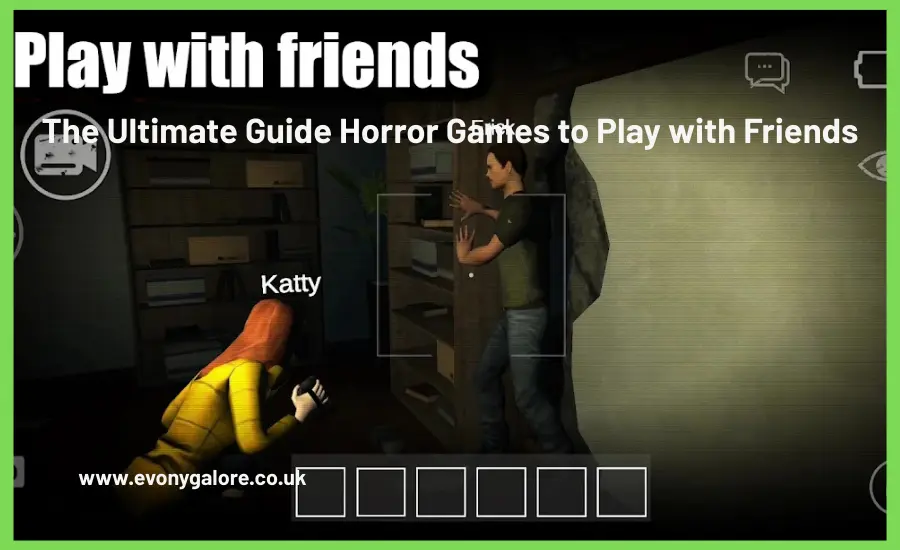
Horror Games to Play with Friends: The Ultimate Guide to Multiplayer Terror in 2025
There is something uniquely thrilling about experiencing fear alongside others. While exploring a haunted location or fleeing from a relentless killer can be exhilarating on your own, sharing that terror with friends transforms the experience entirely. Screams become laughter, tense moments turn into inside jokes, and the fear multiplies exponentially when you realize you’re the last one standing and everyone’s survival rests squarely on your shoulders. Horror games to play with friends have evolved dramatically over the past decade, moving far beyond simple jump scares to create deeply immersive cooperative and competitive experiences that keep players returning night after night.
The multiplayer horror genre has experienced a remarkable renaissance in recent years, driven partly by the rise of streaming platforms and partly by developers who have discovered ingenious ways to maintain tension even when players have backup. Finding the right balance between creating engaging gameplay and delivering enough frightening moments to keep people invested is notoriously difficult, yet the best titles in this space manage to achieve both with remarkable consistency. Whether you prefer cooperating with teammates against AI-controlled threats or engaging in asymmetrical gameplay where one player hunts the others, the landscape of scary multiplayer games has never been more diverse or more terrifying.
Understanding the Appeal of Cooperative Horror Gaming
The psychology behind why horror becomes more enjoyable with friends is fascinating to consider. Traditional horror games rely heavily on isolation and vulnerability to generate fear, yet multiplayer horror titles have discovered that tension can actually intensify through shared experiences. When you hear a friend scream through their microphone from another part of a dark facility, your imagination fills in the gaps about what horrible thing they must have encountered. The knowledge that your companions can fail, that the monster might take them before it comes for you, creates a layer of dread that solo experiences simply cannot replicate.
Cooperative horror games fundamentally change the social dynamics of gaming sessions. Rather than competing against friends in traditional multiplayer formats, these experiences require communication, coordination, and mutual support. Teams naturally develop roles, with some players taking point while others monitor from safety or gather resources. The shared experience of surviving together, or dying together in spectacularly gruesome fashion, creates memorable moments that extend well beyond the gaming session itself. These titles have become increasingly popular for streaming and content creation precisely because the genuine reactions and interpersonal dynamics they generate prove endlessly entertaining to watch.
Phasmophobia: The Gold Standard for Ghost-Hunting Adventures
Few games have captured the essence of paranormal investigation quite like Phasmophobia, the four-player cooperative psychological horror experience that took the gaming world by storm when it launched in early access in 2020. Players assume the roles of ghost hunters entering various haunted locations with professional equipment, tasked with identifying what type of spirit haunts each site. The premise sounds simple enough, but the execution creates one of the most genuinely terrifying experiences available in multiplayer gaming.
The genius of Phasmophobia lies in its evidence-gathering mechanics and the variety of ghost types players must identify. Armed with EMF readers, spirit boxes, thermometers, and night vision cameras, teams methodically search locations for supernatural clues. Each of the more than twenty ghost types exhibits unique traits, personalities, and abilities, ensuring that every investigation feels different from the last. Voice recognition technology allows players to communicate with ghosts through ouija boards and EVP sessions, adding an immersive layer that makes every whispered word feel potentially dangerous. The ghosts actually listen to player conversations and can react to them, meaning that simply speaking the ghost’s name aloud might provoke a deadly response.
What makes Phasmophobia particularly effective as a cooperative experience is the division of labor it naturally creates. Some players prefer diving into haunted locations searching for evidence while fighting for their lives, while others find satisfaction supporting the team from the relative safety of the monitoring truck, using CCTV cameras and motion sensors to track both ghostly activity and their teammates’ positions. Custom difficulty settings allow groups to tailor experiences to their preferences, with proportional rewards encouraging players to push their limits. The game supports VR play for those seeking maximum immersion, though the standard desktop experience remains thoroughly terrifying.
Dead by Daylight: Asymmetrical Horror at Its Finest
For players who prefer competitive horror experiences, Dead by Daylight has reigned supreme since 2016 as the definitive asymmetrical multiplayer horror game. The concept pits four survivors against one killer in a deadly game of cat and mouse, with survivors working together to repair generators and escape while the killer hunts them down for sacrifice to a malevolent entity. Each match becomes a playable horror movie, complete with desperate hiding, frantic running, and last-second rescues that generate incredible tension.
The roster of killers reads like a hall of fame of horror icons. Through numerous licensing agreements, players can stalk survivors as Michael Myers from Halloween, Freddy Krueger from A Nightmare on Elm Street, Ghostface from Scream, or dozens of other terrifying options. Each killer possesses unique powers that fundamentally change hunting strategies, from setting bear traps to becoming invisible to wielding supernatural abilities. Survivors similarly offer varied skills and playstyles, encouraging experimentation with different character builds and team compositions.
Dead by Daylight succeeds where many asymmetrical horror games have failed because of its careful balance between accessibility and depth. New players can quickly understand the basic objectives while veteran players continue discovering strategic nuances hundreds of hours into their experience. Regular content updates introduce new killers, survivors, maps, and game modes, keeping the experience fresh year after year. The procedurally generated map layouts and randomized spawn points ensure that no two matches play identically, maintaining suspense even for experienced players who think they know what to expect.
Lethal Company: Corporate Horror Comedy Done Right
Among recent releases, Lethal Company has emerged as perhaps the most surprising success story in cooperative horror gaming. This indie title created by solo developer Zeekerss thrusts players into the boots of contracted workers collecting scrap from abandoned industrial moons to meet corporate profit quotas. The satirical premise might suggest humor over horror, yet Lethal Company delivers genuine terror alongside its dark comedy, creating an experience that balances screams and laughter in equal measure.
The gameplay loop proves deceptively simple yet endlessly replayable. Teams of up to four players land their spacecraft on various moons, explore facilities filled with procedurally generated rooms, collect valuable scrap while avoiding deadly creatures and traps, then race back to their ship before midnight when the autopilot abandons them. Failure to meet the company’s ever-increasing quota results in players being ejected into space, creating stakes that grow more desperate with each passing day. The proximity chat system means players can only hear teammates who are physically nearby, so splitting up to cover more ground comes with genuine communication risks.
What elevates Lethal Company beyond typical horror fare is its diverse bestiary of monsters, each operating according to unique behavioral rules. Some creatures are blind, others deaf, and some will only move when players look away from them. Learning these rules through trial and fatal error becomes part of the experience, with veteran players sharing knowledge with newcomers while themselves encountering unfamiliar threats. The game has attracted praise for avoiding predatory monetization practices that plague many multiplayer titles, offering simple cooperative fun without battle passes, daily rewards, or fear-of-missing-out mechanics. Players can enjoy a few hours, feel satisfied, and return later without artificial pressure to keep playing.
The Outlast Trials: Pure Survival Horror Goes Multiplayer
The Outlast series built its reputation on brutally intense single-player survival horror, making the announcement of a cooperative multiplayer entry something of a risk. The Outlast Trials proved that gamble spectacularly successful, delivering the franchise’s signature terror in a format that up to four players can experience together. Set during the Cold War era, players become test subjects for the sinister Murkoff Corporation, subjected to unethical experiments designed to break down their psychological defenses.
Unlike asymmetrical horror games where one player becomes the villain, The Outlast Trials places all players on the same side against AI-controlled threats. This design choice preserves the vulnerability and tension that defined earlier entries while adding the complexity of coordinating with teammates. Players must complete objectives throughout various trials while evading enemies and navigating traps, with the difficulty scaling appropriately whether tackling challenges solo or in full groups. The game features some of the most impressive lighting and shadow work in the horror genre, with darkness becoming both an obstacle and a sanctuary as players learn to prefer shadows that hide them over revealing light.
The roguelike progression system keeps players engaged beyond initial playthroughs. Completing trials earns experience points and currency that unlock new tools, abilities, and cosmetic customizations. Different difficulty levels require corresponding skill unlocks, creating a natural progression arc that rewards dedication. The recent Project Relapse update allows maximum-level characters to reset in exchange for permanent ability unlocks, extending the gameplay loop for committed players. Regular content updates have added new trials, mechanics, and story elements, including escape endings that provide narrative closure for those who survive long enough.
Essential Horror Games for Different Group Sizes and Preferences
| Game Title | Players | Horror Style | Best For |
| Phasmophobia | 1-4 | Paranormal Investigation | Teams who enjoy methodical investigation and genuine scares |
| Dead by Daylight | 5 (1v4) | Asymmetrical Survival | Competitive groups who want varied killer and survivor gameplay |
| Lethal Company | 1-4 | Cosmic Corporate Horror | Friends seeking equal parts terror and dark comedy |
| The Outlast Trials | 1-4 | Survival Horror | Groups wanting intense cooperative stealth gameplay |
| Left 4 Dead 2 | 1-4 | Zombie Shooter | Teams preferring action-oriented horror with horde battles |
| Back 4 Blood | 1-4 | Zombie Shooter | Players wanting modern Left 4 Dead gameplay with card mechanics |
| DEVOUR | 1-4 | Ritual Horror | Groups seeking challenging objective-based scares |
| Sons of the Forest | 1-8 | Survival Horror | Teams who enjoy crafting and exploration alongside horror elements |
Back 4 Blood and Left 4 Dead 2: Zombie Shooter Excellence
The cooperative zombie shooter subgenre owes its existence largely to Left 4 Dead 2, and despite being over fifteen years old, this Valve classic remains a benchmark that few games have matched. Four players must fight through hordes of infected across sprawling campaigns, coordinating attacks and watching each other’s backs against special infected types that require specific countermeasures. The game’s AI Director dynamically adjusts difficulty and pacing based on player performance, ensuring consistently engaging experiences whether playing with veterans or newcomers.
Back 4 Blood serves as the spiritual successor from the same development team, updating the formula with modern graphics and a card-based progression system that adds strategic depth to character building. Players construct decks that modify gameplay in various ways, from increased damage to faster healing to special combat abilities. While some purists prefer the straightforward simplicity of Left 4 Dead 2, Back 4 Blood offers meaningful innovation for those seeking fresh takes on cooperative zombie shooting. Both titles deliver intense action that replaces quiet dread with adrenaline-fueled chaos, proving that horror games to play with friends need not rely solely on suspense to deliver memorable experiences.
Tips for Maximizing Your Multiplayer Horror Experience
Successful horror gaming sessions require more than simply launching a game and hoping for the best. Communication stands as the single most important factor in cooperative horror, with teams that coordinate effectively dramatically outperforming those who work in isolation. Establish clear protocols for sharing information, whether calling out enemy positions, requesting assistance, or simply confirming that everyone remains alive. Many horror games feature proximity-based voice chat, making physical grouping decisions communicate choices as well.
Consider the preferences and fear tolerances of your group members when selecting games. Not everyone handles horror equally well, and pressuring reluctant players into experiences beyond their comfort zones rarely produces enjoyable sessions. Games like Lethal Company and Phasmophobia offer difficulty customization that allows groups to dial intensity up or down as needed. Starting with lower difficulty settings and gradually increasing challenge as confidence grows creates more sustainable long-term engagement than immediately diving into maximum terror.
Key Recommendations for Horror Gaming Sessions
- Test equipment beforehand: Ensure microphones, headphones, and internet connections work properly before starting sessions, as technical issues in tense moments ruin immersion
- Establish roles naturally: Let players gravitate toward roles that suit their playstyles rather than forcing assignments
- Embrace failure as entertainment: Deaths and disasters often produce the best stories, so maintain good humor when things go wrong
- Take breaks during extended sessions: Horror fatigue is real, and stepping away briefly helps maintain intensity when returning
- Play in appropriate environments: Dim lighting and quality audio significantly enhance immersion
- Respect player limits: If someone needs to stop or take a break, support that decision without complaint
- Avoid spoiling discoveries: Part of horror’s appeal comes from the unknown, so let teammates encounter surprises naturally
The Future of Multiplayer Horror Gaming
The horror gaming landscape continues evolving with exciting upcoming releases and emerging trends. Games like Reanimal from the original Little Nightmares developers promise shared-screen local multiplayer horror experiences, while titles like Shift At Midnight explore novel premises like working gas station night shifts where some customers aren’t quite human. Virtual reality horror continues advancing, with Phasmophobia’s VR support demonstrating how existing games can expand into new platforms while upcoming VR-native titles push immersion boundaries further.
The rise of streaming culture has fundamentally shaped multiplayer horror development, with games increasingly designed to generate shareable moments and entertaining viewer experiences. Developers recognize that games producing genuine reactions and memorable scenarios attract content creators who then expose their audiences to those titles. This symbiotic relationship has driven innovation in the space, encouraging development teams to focus on replayability, emergent gameplay, and systems that consistently produce unique outcomes.
Conclusion:
Horror games to play with friends represent one of gaming’s most unique social experiences, transforming solitary terror into shared adventure. Whether methodically hunting ghosts in Phasmophobia, desperately fleeing killers in Dead by Daylight, scavenging for corporate overlords in Lethal Company, or surviving psychological torment in The Outlast Trials, options exist for virtually every horror preference and group composition. The key lies in matching game selection to your group’s interests, communication styles, and fear tolerances.
The multiplayer horror genre has matured significantly from its early asymmetrical experiments into a diverse ecosystem of experiences. Cooperative games prove that having backup doesn’t necessarily reduce fear, instead creating new forms of tension around protecting teammates and coordinating under pressure. Competitive titles demonstrate that taking turns as predator and prey generates its own unique thrills. As development continues and new titles emerge, the future promises even more innovative ways to experience terror together. Gather your bravest friends, dim the lights, test your microphones, and prepare to discover that fear shared is fear multiplied.