Crazy Quilt Solitaire Game: A Comprehensive Guide to Mastering This Unique Card Challenge
The world of solitaire games extends far beyond the familiar Klondike variant that most computer users recognize. Among the fascinating array of patience games available to card enthusiasts, Crazy Quilt Solitaire stands out as a particularly engaging and visually distinctive option. This intricate game combines strategic thinking with careful planning, offering players a rewarding experience that challenges both beginners and seasoned solitaire veterans alike. Understanding the mechanics, strategies, and nuances of Crazy Quilt Solitaire can transform your approach to card games and provide countless hours of mentally stimulating entertainment.
Understanding the Foundations of Crazy Quilt Solitaire
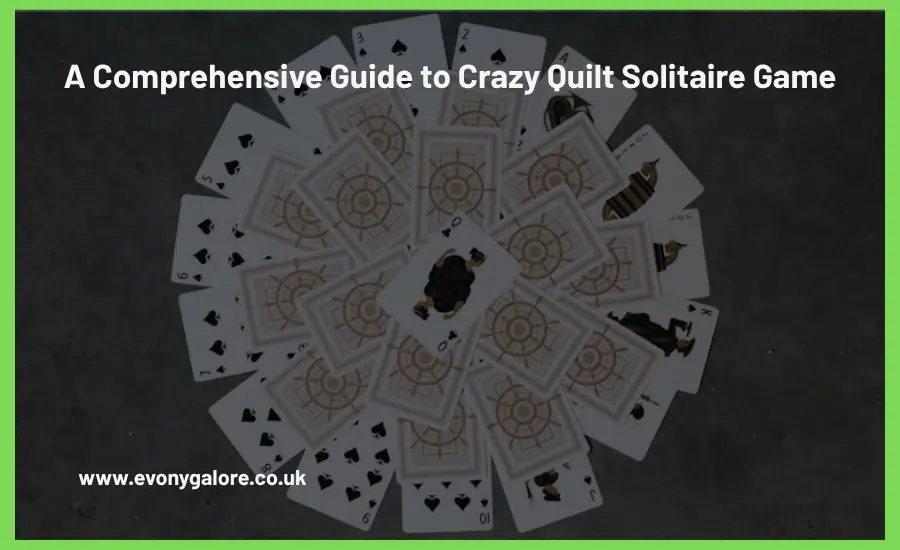
Crazy Quilt Solitaire, sometimes referred to simply as Quilt or Indian Carpet, derives its name from the distinctive arrangement of cards that resembles a patchwork quilt pattern. This tableau-based game utilizes a standard fifty-two-card deck and creates a visual spectacle that immediately distinguishes it from other solitaire variations. The fundamental objective remains consistent with most patience games: building foundation piles in ascending order by suit, ultimately moving all cards from the tableau to these foundations. However, the journey toward this goal involves navigating a uniquely structured layout that presents both opportunities and obstacles throughout gameplay.
The initial setup for Crazy Quilt Solitaire involves dealing sixty-four cards into eight rows and eight columns, creating a square grid pattern. These cards are laid out with every other card placed vertically while alternating cards rest horizontally, generating the characteristic quilted appearance that gives the game its memorable name. The remaining cards form the stock pile, which players draw from when no moves remain available in the tableau. This arrangement creates a complex web of possibilities where only certain cards become available for play at any given moment, requiring players to think several moves ahead and anticipate how their decisions will impact future options.
What makes Crazy Quilt Solitaire particularly intriguing is the availability rule governing which cards can be moved. Only cards that have at least one short side completely free from adjacent cards can be played. This means that cards positioned in the layout must have either their top or bottom edge (for horizontally placed cards) or their left or right edge (for vertically placed cards) completely exposed without any neighboring cards touching that side. This restriction creates a puzzle-like quality where the sequence of moves becomes crucial, as removing one card might liberate several others or alternatively block potential future plays if executed without foresight.
Strategic Approaches and Tactical Considerations
Developing proficiency at Crazy Quilt Solitaire requires more than understanding the basic rules; it demands cultivating strategic thinking patterns that account for the interconnected nature of the tableau. Successful players recognize that every card removal creates cascading effects throughout the layout, potentially opening new opportunities or inadvertently restricting future options. The key to consistent success lies in evaluating not merely which moves are currently possible, but which sequences of moves will maintain maximum flexibility while steadily progressing toward the ultimate goal of clearing the tableau.
One fundamental strategy involves prioritizing moves that expose the greatest number of additional cards. When faced with multiple playable options, experienced players assess which choice will unlock more cards for subsequent moves. This approach maximizes the decision tree available for future turns, reducing the likelihood of reaching a deadlock position where no legal moves remain despite cards still present in the tableau. Additionally, focusing on cards that occupy central positions within the quilt pattern tends to yield greater benefits than immediately playing edge cards, as centrally located cards typically block access to multiple surrounding cards.
Another critical tactical consideration involves managing the foundation piles strategically rather than automatically moving every available card to foundations immediately. While the eventual objective requires all cards to reach the foundations, premature movement can sometimes eliminate options needed for unlocking crucial cards in the tableau. Skilled players maintain awareness of which ranks remain in play and occasionally delay foundation building when keeping certain cards accessible in the tableau provides greater tactical flexibility. This nuanced approach distinguishes intermediate players from true experts who understand the delicate balance between progressing toward victory and maintaining operational freedom.
The stock pile represents another dimension of strategic decision-making in Crazy Quilt Solitaire. Players must judiciously determine optimal timing for drawing from the stock versus exhausting all available tableau moves first. Drawing too early might waste opportunities to expose cards through tableau manipulation, while waiting too long could result in reaching an unwinnable position. Developing intuition about this timing comes through experience and careful observation of patterns that emerge across multiple games.
Essential Playing Tips for Improved Performance
Card Identification and Planning
- Always survey the entire tableau before making any move, identifying all currently playable cards rather than impulsively playing the first available option
- Track which cards remain in the layout and anticipate which ranks will become available as you progress through the game
- Pay special attention to Aces and low-ranking cards, as these form the foundation bases, and removing them early can facilitate smoother progression
Layout Analysis Techniques
- Mentally map the relationships between cards, noting which removals will expose multiple additional cards versus those that free only one or two options
- Recognize patterns in the vertical and horizontal card orientations, understanding how these affect which edges must be clear for play
- Develop the habit of working backward from desired outcomes, visualizing the sequence of moves required to reach specific cards buried within the tableau
Foundation Management Strategies
- Establish all four foundation piles as early as possible to maximize placement options for cards as they become available
- Maintain relatively balanced foundation heights when possible, avoiding situations where one suit races far ahead while others lag significantly behind
- Remember that cards played to foundations cannot return to the tableau, so ensure you truly want to commit a card before moving it
Stock Pile Utilization
- Exhaust all reasonable tableau moves before drawing from the stock to maximize the information available for decision-making
- When stuck, draw from stock promptly rather than dwelling on an unsolvable position, as the new card might unlock previously unavailable sequences
- Keep a mental track of how many stock cards remain, adjusting your risk tolerance and move selection based on this reserve
Common Mistakes and How to Avoid Them
Many players new to Crazy Quilt Solitaire fall into predictable traps that undermine their success rate. Perhaps the most frequent error involves moving cards to foundations reflexively without considering whether maintaining those cards in the tableau might prove more valuable. This automatic play style, while appropriate for some simpler solitaire variants, often proves counterproductive in Crazy Quilt, where tableau manipulation represents the primary challenge. Players should cultivate the discipline to pause and evaluate whether a foundation move truly serves their strategic interests or merely provides immediate gratification without substantial benefit.
Another common pitfall involves failing to adequately survey the entire layout before committing to moves. The complex interwoven structure of Crazy Quilt Solitaire means that seemingly isolated sections of the tableau often interconnect in non-obvious ways. Players who focus narrowly on one region while ignoring developments elsewhere frequently miss superior move sequences that would emerge from more comprehensive analysis. Developing the habit of systematic scanning, perhaps working methodically from one corner across the entire layout before selecting any move, helps prevent these oversights and reveals opportunities that might otherwise remain hidden.
Impatience represents yet another enemy of success in Crazy Quilt Solitaire. The game rewards careful deliberation and thorough planning rather than rapid play. Players who rush through moves often find themselves painted into corners where winnable games become losses due to hasty decisions that seemed reasonable in isolation but proved disastrous in context. Embracing a more measured pace, especially when learning the game, allows players to develop the pattern recognition and strategic intuition necessary for consistent success. As familiarity grows, decision-making naturally accelerates without sacrificing quality, but this efficiency should emerge organically rather than being forced prematurely.
Comparing Crazy Quilt to Other Solitaire Variations
| Feature | Crazy Quilt | Klondike | FreeCell | Spider |
| Deck Usage | Single 52-card deck | Single 52-card deck | Single 52-card deck | Two 52-card decks |
| Initial Layout | 8×8 grid (64 cards) | 7 tableau columns | 8 tableau columns | 10 tableau columns |
| Skill vs. Luck Ratio | 60% skill / 40% luck | 30% skill / 70% luck | 95% skill / 5% luck | 70% skill / 30% luck |
| Average Game Duration | 10-15 minutes | 5-8 minutes | 8-12 minutes | 15-25 minutes |
| Win Rate (Skilled Player) | 40-50% | 15-20% | 99%+ | 50-60% |
| Difficulty Level | Intermediate-Advanced | Beginner-Intermediate | Intermediate | Intermediate-Advanced |
| Unique Mechanic | Alternating card orientation | Building down by alternating colors | Free cells for temporary storage | Same-suit sequences |
This comparison highlights how Crazy Quilt Solitaire occupies a distinctive position within the solitaire family. Its blend of skill and chance creates engaging gameplay where players can significantly influence outcomes through strategic excellence while still encountering unwinnable deals that keep the game from becoming mechanical. The intermediate difficulty level makes it accessible to players who have mastered basic solitaire concepts but seek greater challenge than Klondike provides, yet it remains less deterministic than FreeCell, preserving an element of uncertainty that maintains excitement across repeated plays.
The Psychological Benefits of Playing Crazy Quilt Solitaire
Beyond mere entertainment value, engaging regularly with Crazy Quilt Solitaire offers numerous cognitive and psychological benefits that extend into everyday life. The game inherently exercises spatial reasoning abilities as players must mentally rotate the layout to identify playable cards based on their orientation and surrounding neighbors. This spatial manipulation strengthens neural pathways associated with three-dimensional thinking and mental visualization, skills that transfer to practical applications ranging from navigation to furniture arrangement to understanding complex diagrams and technical drawings.
The planning and foresight required for successful Crazy Quilt Solitaire play also cultivates executive function capabilities that prove valuable across diverse contexts. Players learn to inhibit impulsive responses, evaluating multiple options before committing to action. They develop working memory capacity by tracking which cards have been played, which remain in the stock, and which moves will become available after executing current plans. These cognitive skills, honed through enjoyable gameplay, directly translate to improved performance in professional settings, academic environments, and daily decision-making scenarios where careful analysis yields better outcomes than reactive behavior.
Additionally, Crazy Quilt Solitaire provides an excellent vehicle for practicing emotional regulation and frustration tolerance. Not every deal proves winnable regardless of perfect play, and even skilled players encounter losses that result from unfortunate card distributions rather than tactical errors. Learning to accept these outcomes gracefully, extracting lessons from defeats while celebrating victories without overconfidence, builds psychological resilience that serves players well in all competitive and goal-oriented endeavors. The solitary nature of the game also makes it an ideal stress-reduction activity, offering focused mental engagement that displaces anxious rumination while providing a sense of control and accomplishment when games conclude successfully.
Advanced Techniques for Expert-Level Play
Once players have mastered the fundamental strategies of Crazy Quilt Solitaire, several advanced techniques can elevate performance to expert levels. One sophisticated approach involves maintaining a mental model of card distribution probabilities based on which cards have appeared and which remain either in the stock or buried in the tableau. Expert players develop intuitive senses for when aggressive foundation building makes sense versus when conservative play better preserves options. This probabilistic thinking, while not requiring formal mathematical calculation, emerges from extensive experience and conscious attention to patterns across numerous games.
Another advanced technique involves recognizing and exploiting temporary positions where breaking normal strategic guidelines yields superior outcomes. Sometimes accepting a suboptimal immediate position leads to dramatically better circumstances several moves later. Identifying these exceptional situations requires deep familiarity with the game’s tactical patterns and the confidence to deviate from standard approaches when circumstances warrant. Expert players develop libraries of recognized positions where counterintuitive moves prove correct, applying these lessons when similar configurations emerge in future games.
The concept of tempo also becomes relevant at advanced levels of play. Understanding which move sequences allow continuous progress versus those that require pausing to assess or draw from stock influences overall efficiency and success rates. Expert players minimize wasted motion, selecting move orders that maintain forward momentum while preserving maximum flexibility. This efficiency doesn’t necessarily mean playing faster in terms of time, but rather accomplishing more productive work per decision point, steadily advancing toward victory without unnecessary backtracking or reconsideration.
Digital Versions and Online Resources
The digital age has brought Crazy Quilt Solitaire to broader audiences through various computer and mobile implementations. Numerous websites offer free online versions that faithfully recreate the traditional card game experience while adding conveniences like unlimited undo, hint systems, and statistics tracking. These digital adaptations make the game more accessible than physical card play, eliminating the tedious setup process while providing instant feedback about legal moves and automatic rule enforcement that helps players learn more efficiently.
When selecting a digital version of Crazy Quilt Solitaire, players should consider several factors that affect gameplay quality. The best implementations offer a clear visual distinction between horizontally and vertically oriented cards, making playability assessment intuitive at a glance. Responsive controls that allow smooth card movement without frustrating interface delays enhance the experience significantly. Optional features like customizable card backs, background themes, and animation speeds let players tailor the environment to personal preferences without compromising core gameplay mechanics.
Many serious Crazy Quilt Solitaire enthusiasts appreciate applications that provide detailed statistics, including win rates, average game durations, and move counts. These metrics enable players to track improvement over time, set personal goals, and measure progress toward mastery. Some advanced programs even offer analysis features that review completed games, identifying potential improvements and suggesting alternative move sequences that might have led to better outcomes. While these analytical tools can accelerate learning, players should balance their use with developing independent strategic thinking to avoid becoming dependent on computational assistance.
Conclusion:
Crazy Quilt Solitaire represents a rewarding journey for anyone seeking to expand their card gaming repertoire beyond mainstream variations. Its unique layout creates fresh challenges that engage spatial reasoning, strategic planning, and tactical flexibility in ways that few other patience games match. The moderate difficulty level ensures that success remains achievable through skill development while preserving enough uncertainty to maintain interest across countless plays. Whether pursued casually for relaxation or studied seriously for mastery, Crazy Quilt Solitaire offers depth that rewards continued engagement.
The game’s combination of immediate accessibility and long-term strategic depth makes it ideal for players at various skill levels. Beginners can learn the basic rules quickly and achieve occasional victories through straightforward play, while experienced players discover subtle nuances that distinguish good moves from optimal ones. This scalability ensures that Crazy Quilt Solitaire remains engaging throughout the progression from novice to expert, continually presenting new insights and challenges as understanding deepens.
Ultimately, Crazy Quilt Solitaire exemplifies the enduring appeal of well-designed patience games. Its elegant rule structure generates complex strategic landscapes without overwhelming players with arbitrary complications. The satisfying visual pattern of the initial deal immediately captures attention, while the underlying gameplay mechanics sustain interest across repeated sessions. For anyone seeking a mentally stimulating card game that balances skill and chance, offering immediate enjoyment and lasting replay value, Crazy Quilt Solitaire is an excellent choice worth exploring and mastering.