London 2012 Olympics Game PC: A Comprehensive Guide to the Official Olympic Gaming Experience
The London 2012 Olympics represented a monumental celebration of athletic excellence, bringing together nations from across the globe in a spectacular display of sportsmanship and competition. While millions watched the games unfold on television, gaming enthusiasts had the unique opportunity to experience the thrill of Olympic competition through the officially licensed London 2012 Olympics game for PC. This digital adaptation brought the excitement of the world’s premier sporting event directly to computer screens worldwide, allowing players to compete in various Olympic disciplines, represent their chosen nations, and pursue virtual glory in meticulously recreated venues. The game captured the essence of Olympic competition while providing accessible gameplay mechanics that appealed to both casual gamers and sports simulation enthusiasts alike.
Understanding the London 2012 Olympics PC Game: Features and Gameplay Mechanics
The London 2012 Olympics game for PC emerged as the official video game adaptation of the XXX Olympiad, developed by Sega Studios Australia and published by Sega. This title distinguished itself from previous Olympic games by incorporating motion capture technology from actual Olympic athletes, ensuring that animations and movements reflected authentic athletic performances. The game featured over thirty Olympic events spanning multiple disciplines, including track and field, swimming, diving, gymnastics, kayaking, cycling, and table tennis, among others. Each event was carefully designed to provide intuitive controls while maintaining sufficient depth to reward skillful play and strategic timing.
The visual presentation of the London 2012 Olympics PC game showcased detailed renditions of iconic Olympic venues, including the Olympic Stadium, Aquatics Centre, and Velodrome. The developers invested considerable effort in recreating the atmosphere of the actual games, incorporating crowd animations, authentic commentary, lighting effects, and environmental details that transported players to the heart of London during the summer games. The game supported various control schemes, allowing players to use keyboard controls, gamepad configurations, or even motion controllers, depending on their preferences and available hardware. This flexibility ensured that the game remained accessible regardless of a player’s gaming setup or experience level.
One of the standout features of the London 2012 Olympics game on PC was its multiplayer functionality, which allowed up to four players to compete simultaneously in local multiplayer mode. This feature transformed the game into an excellent party experience, where friends and family members could challenge each other in Olympic events, creating memorable competitive moments in living rooms around the world. The game also included online multiplayer capabilities, enabling players to test their skills against competitors globally, climb leaderboards, and represent their chosen nations in virtual Olympic glory. The progression system rewarded consistent performance with unlockable content, including new countries, additional customization options, and achievement badges that commemorated specific accomplishments.
System Requirements and Technical Specifications for Optimal Performance
Understanding the technical requirements for running the London 2012 Olympics game on PC is essential for ensuring smooth gameplay and an enjoyable experience. The game was optimized for Windows-based systems and required specific hardware configurations to function properly. The minimum system requirements included a Windows XP, Vista, or Windows 7 operating system, though the game performed optimally on Windows 7 systems. Processor requirements called for at least an Intel Core 2 Duo processor running at 2.4 GHz or an AMD equivalent, ensuring that the game’s physics calculations and AI routines could execute without significant performance degradation.
Memory requirements for the London 2012 Olympics PC game specified a minimum of two gigabytes of RAM, though four gigabytes was recommended for smoother performance, particularly during events with multiple competitors or complex environmental effects. Graphics card requirements positioned the game as accessible to mid-range gaming systems, requiring at least a DirectX 9.0c compatible graphics card with 256 MB of video memory. However, for optimal visual fidelity and higher frame rates, a graphics card with 512 MB or more of dedicated video memory was recommended. The game required approximately eight gigabytes of available hard drive space for installation, including room for save files and potential updates or patches.
Recommended System Specifications for Enhanced Experience:
- Operating System: Windows 7 (64-bit) or higher for maximum compatibility and performance
- Processor: Intel Core i5 or AMD Phenom II X4 running at 3.0 GHz or higher for smoother frame rates during intense competition sequences
- Memory: 4 GB RAM or greater to accommodate background processes while maintaining consistent performance
- Graphics Card: NVIDIA GeForce GTX 460 or AMD Radeon HD 5850 with 1 GB VRAM for enhanced visual effects and higher resolution support
- Storage: 10 GB available space to accommodate the full installation, plus additional content, and save data
- Sound Card: DirectX compatible sound card for an immersive audio experience with crowd reactions and commentary
- Internet Connection: Broadband connection required for online multiplayer features, leaderboard updates, and potential patches
The London 2012 Olympics game supported various display resolutions, allowing players to configure visual settings based on their monitor specifications and system capabilities. Players with more powerful hardware could enable advanced graphical features such as anti-aliasing, enhanced shadow rendering, and higher-quality texture filtering, while those with modest systems could adjust settings to prioritize frame rate stability over visual fidelity. The game’s scalability ensured that a wide range of PC configurations could run the title, though optimal experiences naturally favored more capable gaming systems.
Event Selection and Competitive Disciplines Available in the Game
The London 2012 Olympics PC game featured an impressive roster of Olympic events, carefully selected to represent the diversity of competition at the actual games while focusing on disciplines that translated effectively to interactive gameplay. Track and field events formed the cornerstone of the experience, with the game including the 100-meter sprint, 110-meter hurdles, 400-meter race, 1500-meter run, javelin throw, hammer throw, discus throw, long jump, triple jump, and pole vault. Each event required different input techniques and timing mechanics, ensuring variety and preventing gameplay from becoming monotonous across multiple competitions.
Aquatic events provided another significant component of the game’s event roster, featuring multiple swimming disciplines across different distances and strokes. Players could compete in freestyle, backstroke, breaststroke, and butterfly events, each requiring specific button-pressing rhythms and strategic stamina management to achieve optimal performance. Diving events challenged players with precision timing mechanics as they executed complex aerial maneuvers before entering the water with minimal splash. The kayaking events added variety by introducing navigational challenges alongside speed-based competition, requiring players to steer through courses while maintaining momentum against the current and competitors.
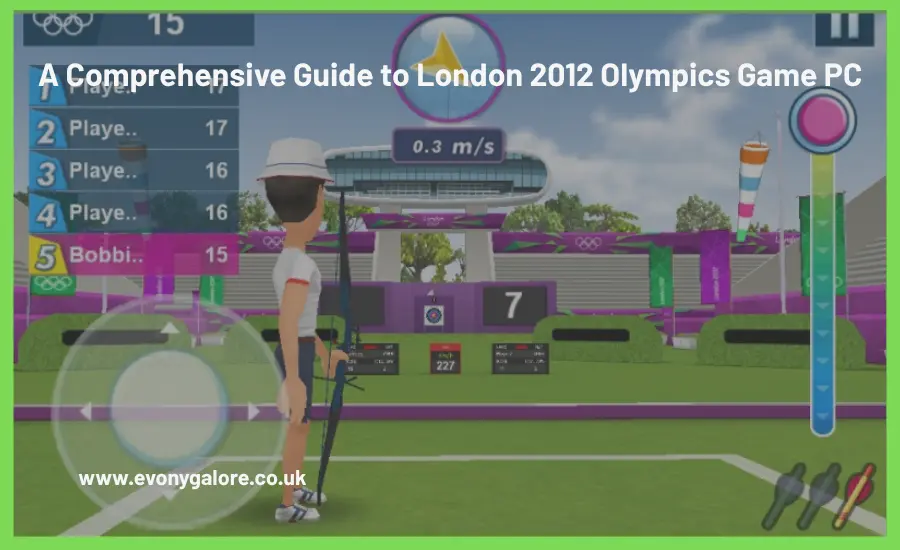
The cycling disciplines showcased both track cycling and BMX events, each presenting unique gameplay challenges. Track cycling emphasized sustained speed and strategic positioning within the peloton, while BMX racing combined rapid acceleration with aerial tricks and obstacle navigation. Gymnastics events, including vault and trampoline competitions, tested players’ timing precision as they executed increasingly complex routines for judges’ scores. Table tennis provided a back-and-forth competitive experience that rewarded quick reflexes and strategic shot placement. The archery event challenged players with steadiness mechanics, requiring them to control breathing and account for environmental factors like wind when aiming at distant targets.
Game Modes and Progression Systems That Enhance Replayability
The London 2012 Olympics PC game offered multiple game modes designed to accommodate different play styles and preferences, ensuring that the experience remained engaging across extended play sessions. The Olympic Games mode served as the primary single-player experience, allowing players to select a nation and compete across all available events to accumulate medals and achieve the highest overall ranking. This mode simulated the structure of the actual Olympic Games, presenting events in a logical sequence and tracking cumulative performance through medal tables and statistical breakdowns. Players could customize their experience by selecting which events to participate in, allowing them to focus on preferred disciplines while skipping those they found less enjoyable.
Training mode provided an essential learning environment where players could practice individual events without competitive pressure, mastering the specific control schemes and timing requirements for each discipline. This mode proved invaluable for newcomers seeking to understand gameplay mechanics before entering serious competition, and for experienced players attempting to refine their techniques for specific events. The game included helpful tutorials and visual indicators within training mode that demonstrated optimal input timing and strategic approaches for achieving better performance. Performance statistics tracked improvement over time, allowing players to monitor their progress and identify areas requiring additional practice.
Party Play mode transformed the London 2012 Olympics PC game into a social experience, supporting local multiplayer competition for up to four players simultaneously. This mode featured streamlined event selections optimized for quick, exciting competitions that maintained energy and engagement among groups. The game rotated through various events automatically or allowed players to construct custom competition playlists featuring their favorite disciplines. Leaderboards tracked performance within party sessions, crowning overall champions based on cumulative results across multiple events. The accessibility of controls in party mode ensured that even players with minimal gaming experience could participate meaningfully and enjoy the competitive atmosphere.
Online multiplayer extended the competitive experience beyond local gatherings, connecting players with opponents worldwide through internet-based matchmaking. The online infrastructure supported both casual and ranked matches, with the ranked system assigning players’ skill ratings based on their performance and matching them against similarly skilled competitors. Global leaderboards showcased the top performers for individual events and overall Olympic standings, creating aspirational targets for dedicated players seeking recognition within the community. The game incorporated regular challenges and limited-time events that encouraged players to return regularly and test their skills in specific disciplines under unique conditions or rule modifications.
Visual Presentation and Audio Design: Creating Olympic Atmosphere
The visual presentation of the London 2012 Olympics PC game represented a significant achievement in recreating the spectacle and grandeur of the actual Olympic Games within an interactive medium. The development team invested substantial resources in accurately modeling Olympic venues, ensuring that players competed in digital recreations of the iconic locations that hosted the real events. The Olympic Stadium featured in track and field events displayed impressive attention to architectural detail, from the distinctive exterior structure to the arrangement of spectator seating and the precise dimensions of the athletic field. Lighting effects simulated various times of day and weather conditions, adding visual variety and atmospheric authenticity to competitions.
Character models and animations benefited from motion capture sessions with actual athletes, resulting in movements that faithfully represented the biomechanics of Olympic competition. Sprinters displayed the explosive acceleration and distinctive running gaits of world-class athletes, while gymnasts executed complex routines with the fluid grace expected from elite performers. The game rendered these animations with smooth frame rates on adequately equipped systems, ensuring that the visual experience remained immersive and responsive during gameplay. Customization options allowed players to select from numerous national uniforms and adjust certain cosmetic elements, adding personalization to their Olympic avatars.
Crowd animations and ambient details contributed significantly to the atmospheric presentation, with spectators reacting dynamically to performances, cheering for exceptional achievements, and maintaining appropriate energy levels throughout events. The developers programmed the virtual crowds to respond specifically to the represented nations, creating home-field advantage scenarios and replicating the international flavor of Olympic competition. Graphical effects such as replay systems, slow-motion sequences highlighting spectacular moments, and on-screen overlays displaying competitor information and performance statistics mimicked television broadcast presentations, further enhancing the authentic Olympic feel.
London 2012 Olympics Games Across Different Platforms
| Feature Category | PC Version | Console Versions | Key Differences |
| Graphics Quality | Customizable settings up to high resolution with advanced effects | Fixed settings optimized for specific console hardware | PC offers superior visual fidelity on high-end systems with adjustable options |
| Control Schemes | Keyboard, gamepad, and motion controller support | Console-specific controllers with motion options | PC provides the greatest control, flexibility, and customization |
| Multiplayer Capacity | Local (4 players) and online with dedicated servers | Local (4 players) and online with console networks | Similar functionality with platform-specific online ecosystems |
| Performance | Variable based on hardware (30-60+ fps possible) | Locked at 30 fps on most consoles | PC achieves higher frame rates with adequate hardware |
| Loading Times | Faster with SSD installation options | Standard HDD loading times | PC with SSD offers significantly reduced loading periods |
| Mod Support | Potential for community modifications and tweaks | No modification capabilities | PC version theoretically supports user-created content |
| Price Point | Varied based on the digital distribution platform | Standard retail pricing | PC often available at discounted rates through sales |
| Display Resolution | Support for 1080p, 1440p, 4K and beyond | Maximum 1080p on most platforms | PC supports unlimited resolution scaling |
Strategies and Tips for Mastering Olympic Events
Achieving excellence in the London 2012 Olympics PC game requires understanding the specific mechanics governing each event and developing strategies that optimize performance. Track and field sprinting events fundamentally depend on maintaining optimal rhythm during the acceleration phase while conserving stamina for a strong finish. Players should focus on consistent, well-timed button presses rather than frantic mashing, as the game rewards smooth rhythmic inputs over raw speed. The starting technique proves crucial in shorter distances, requiring precise timing on the starting gun to avoid false starts while achieving explosive initial acceleration that establishes position advantages.
Throwing events demand careful attention to angle and power mechanics, with optimal performance requiring players to release implements within narrow windows that maximize distance while maintaining validity. The game typically employs circular meters or timing indicators that players must stop at specific points to achieve ideal results. Practicing these timing mechanics in training mode develops muscle memory that translates to consistent performance during actual competition. Understanding the physics simulation governing each throwing discipline helps players adjust strategies based on environmental factors when applicable, such as wind conditions affecting javelin or discus throws.
Swimming events introduce stamina management as a critical strategic element, as maintaining maximum speed throughout longer races rapidly depletes energy reserves and results in significantly reduced performance during final stretches. Successful swimmers must modulate their pace based on race distance, accelerating strategically during optimal moments rather than sustaining maximum effort continuously. Turn execution provides opportunities for gaining advantages over competitors, as well-timed flip turns maintain momentum, while poor execution costs valuable time. Breathing mechanics in some swimming events add another layer of strategy, requiring players to balance oxygen replenishment with maintaining optimal stroke rhythm.
Essential Tips for Competitive Success:
- Master the timing mechanics for each event through dedicated practice sessions rather than relying on button-mashing techniques that rarely produce optimal results
- Study opponent patterns in AI competitions to identify strategic opportunities for overtaking or establishing commanding leads during critical race segments
- Manage stamina resources carefully in endurance events by monitoring on-screen indicators and pacing efforts to ensure sufficient energy reserves for strong finishes
- Utilize replays to analyze performances and identify technical mistakes or timing errors that prevented optimal results
- Experiment with different control schemes to find configurations that feel most natural and responsive for your play style
- Participate in online competitions to experience diverse strategies from human opponents that challenge and improve your overall skill level
Technical Issues and Community Solutions
Like many PC games, the London 2012 Olympics title occasionally presented technical challenges that players needed to address for optimal experiences. Common issues reported by the community included controller recognition problems, particularly with certain third-party gamepad models that the game failed to detect or map correctly. Players discovered that manually configuring controllers through third-party mapping software or the game’s settings menu often resolved these difficulties. Some users experienced graphical glitches or performance stuttering on specific hardware configurations, typically resolving these through graphics driver updates or adjusting in-game visual settings to reduce system load.
Compatibility concerns emerged for players using newer operating systems beyond the game’s original target platforms, particularly those running Windows 10 or Windows 11. The gaming community developed workarounds, including running the game in compatibility mode for earlier Windows versions, adjusting administrator permissions, or applying community-created patches that addressed specific compatibility issues. Audio problems occasionally affected users, with solutions typically involving updating sound card drivers, adjusting audio acceleration settings, or modifying the game’s audio configuration files directly.
Online multiplayer functionality sometimes encountered connectivity issues or matchmaking delays, particularly as the game’s active player population declined in the years following release. Players seeking online competition often coordinate through community forums or social media groups to arrange matches directly rather than relying solely on automated matchmaking systems. The dedicated community surrounding the London 2012 Olympics PC game created comprehensive troubleshooting guides, performance optimization tutorials, and compatibility resources that extended the game’s functional lifespan well beyond its initial release period.
Legacy and Impact on Olympic Gaming
The London 2012 Olympics game for PC represented an important iteration in the long history of officially licensed Olympic video games, demonstrating how modern technology could capture the essence of Olympic competition in interactive form. While reception among critics and players proved mixed, with some praising the authentic presentation and accessible gameplay while others criticized repetitive mechanics and limited depth in certain events, the game succeeded in bringing Olympic excitement to gaming audiences worldwide. The title maintained relevance beyond the actual 2012 Olympic Games, serving as a digital time capsule commemorating that particular Olympiad while providing ongoing entertainment value for sports gaming enthusiasts.
The game’s approach to balancing accessibility with competitive depth influenced subsequent Olympic titles and sports gaming more broadly, demonstrating that successful adaptations must accommodate both casual players seeking fun party experiences and dedicated gamers pursuing mastery and competitive achievement. The integration of online leaderboards and multiplayer functionality established expectations for connectivity features in sports simulation games, while the emphasis on motion-captured, authentic animations raised standards for visual presentation in the genre. The London 2012 Olympics PC game ultimately served as both an entertaining product in its own right and an evolutionary step in the ongoing development of Olympic video game adaptations.
For contemporary players interested in experiencing the London 2012 Olympics game on PC, the title remains available through various digital distribution platforms and physical media retailers specializing in older games. While the active online community has diminished considerably since the game’s peak popularity, the single-player and local multiplayer components retain their entertainment value, particularly for Olympics enthusiasts or collectors of sports gaming titles. The game stands as a nostalgic reminder of the 2012 London Olympics and an enjoyable, if imperfect, attempt to translate Olympic glory into interactive digital entertainment that anyone could experience from their home computer.