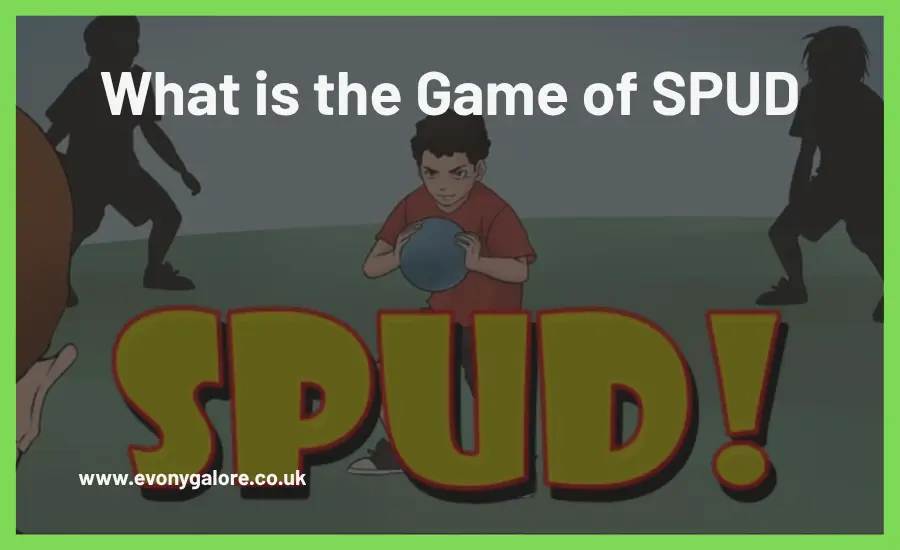
What is the Game of SPUD? A Complete Guide to This Classic Playground Activity
The game of SPUD is a timeless outdoor activity that has entertained children for generations, combining elements of dodgeball, tag, and quick reflexes into one exhilarating experience. This classic playground game requires minimal equipment, can accommodate various group sizes, and provides an excellent opportunity for physical exercise while developing hand-eye coordination and strategic thinking. SPUD stands out as one of those rare games that transcends age barriers, offering enjoyment for elementary school children through teenagers and even adults looking to reconnect with their youthful energy. Understanding the mechanics, rules, and variations of SPUD can help parents, teachers, and recreational coordinators introduce this engaging activity to new generations while maintaining the spirit of active outdoor play.
Understanding the Basic Concept and Origins of SPUD
SPUD represents a category of playground games that emerged during the mid-twentieth century in American schoolyards, though its exact origins remain somewhat mysterious. The game’s name itself is believed to be an acronym, though multiple interpretations exist within different communities. Some claim SPUD stands for “Speed, Power, Unity, and Determination,” while others suggest it simply refers to the four letters used to track players’ elimination status throughout the game. Regardless of its etymological roots, SPUD has maintained remarkable staying power in playground culture, adapting to different environments while preserving its core gameplay mechanics.
The fundamental appeal of SPUD lies in its simplicity and accessibility. Unlike many organized sports that require specialized equipment, designated playing fields, or extensive rule knowledge, SPUD can be played virtually anywhere with an open space and a single ball. This democratic nature has contributed to its widespread adoption across diverse communities, socioeconomic backgrounds, and geographical regions. The game flourishes in schoolyards, summer camps, community centers, and neighborhood gatherings, serving as a social equalizer where athletic prowess matters less than quick thinking and spatial awareness. The low barrier to entry means that newcomers can join ongoing games with minimal explanation, making it an ideal icebreaker activity for groups of children who may not know each other well.
Essential Equipment and Setup Requirements
One of SPUD’s greatest advantages is its minimal equipment requirements, making it an economical choice for schools and recreational programs operating on limited budgets. The primary and essentially only equipment needed is a playground ball, typically a rubber ball approximately eight to ten inches in diameter. While traditional red playground balls work perfectly, any soft rubber ball of a similar size will suffice, including foam balls, volleyballs, or even slightly deflated basketballs. The key consideration is selecting a ball that can be thrown with reasonable accuracy but won’t cause injury upon impact, as players will be catching and dodging the ball throughout the game.
The playing area for SPUD should be relatively flat and clear of obstacles, with enough space for players to run safely in all directions. A typical game requires a circular area with approximately a thirty to fifty-foot radius, depending on the number of participants and their ages. Outdoor spaces like grassy fields, playgrounds, parking lots, or gymnasiums work exceptionally well. The ground surface should provide adequate traction to prevent slipping during quick directional changes, though the game adapts reasonably well to various terrains, including grass, asphalt, or indoor flooring. Before beginning play, designated boundaries should be established and communicated clearly to all participants, as leaving these boundaries during certain phases of gameplay can result in penalties or automatic letter acquisition.
Step-by-Step Rules and Gameplay Mechanics
The game of SPUD begins with all players gathering in a close group around the person designated as “it” for the first round. This initial player holds the ball and assigns each participant a unique number, typically starting from one and continuing sequentially until everyone has been numbered. Players must remember their assigned numbers throughout the game, as these identifiers become crucial during the throwing phase. Once numbers have been distributed, the player with the ball throws it high into the air while simultaneously calling out one player’s number loudly and clearly. The moment the ball is thrown and the number is called, all players except the one whose number was announced scatter in different directions, running as far away from the center point as possible.
The player whose number was called must rush to catch or retrieve the ball as quickly as possible. If they catch the ball before it touches the ground, they have the option to immediately call another number and throw the ball upward again, continuing the scattering phase. However, if the ball bounces or touches the ground before being secured, the retrieving player must grab it and shout “SPUD!” at the top of their lungs. The instant “SPUD” is called, all other players must freeze in their current positions, unable to move their feet from that spot. This freezing mechanic creates the game’s central tension, as players must balance their desire to run far away with the risk of being caught in an exposed position when movement is suddenly prohibited.
After successfully freezing all other players, the person holding the ball may take up to four giant steps (sometimes called “banana steps” or “elephant steps”) in any direction toward their chosen target. Strategic players will use these steps to position themselves optimally for their throw, typically selecting the player who is closest or appears least prepared to dodge. Once positioned, the thrower must attempt to hit their target below the shoulders with the ball. The targeted player can twist, bend, duck, and move their upper body in any way to avoid being hit, but their feet must remain planted in place. If the thrower successfully hits their target, that player receives a letter (starting with “S,” then “P,” “U,” and finally “D”). However, if the thrower misses completely, they receive a letter instead as a penalty for their poor aim.
Scoring System and Elimination Process
The scoring mechanism in SPUD creates a progressive elimination system that keeps players engaged even as they accumulate letters. When a player is hit by the ball or misses their own throw, they receive one letter in the sequence S-P-U-D. The first infraction earns an “S,” the second adds a “P,” the third brings a “U,” and the fourth and final letter, “D,” results in elimination from the current game. This graduated penalty system ensures that players have multiple opportunities to remain in the game despite occasional mistakes, preventing premature elimination that could reduce participation and enjoyment. The psychological pressure increases with each acquired letter, as players with three letters (S-P-U) know that one more hit will end their participation.
After each throwing sequence, whether the thrower hits or misses their target, the player who receives the letter becomes “it” for the next round. They gather all remaining players together, redistribute numbers if necessary (though typically numbers remain consistent throughout a single game), and restart the throwing and scattering sequence. This rotation ensures that no single player dominates the throwing role and that everyone experiences both offensive and defensive positions throughout the game. The game continues with successive rounds until only one player remains without spelling the complete word “SPUD.” That final player is declared the winner and often receives the privilege of being “it” first in the subsequent game, creating a natural transition for continuous play.
Strategic Tips and Advanced Techniques
Offensive Strategies for Throwers
Experienced SPUD players develop sophisticated strategies that significantly improve their success rates and extend their survival in the game. When assigned the throwing role, several tactical considerations can enhance accuracy and effectiveness:
- Distance Management: Rather than automatically targeting the nearest player, assess whether a slightly more distant player is positioned more vulnerably. Sometimes, a player ten feet away who is off-balance or twisted awkwardly presents an easier target than someone five feet away standing squarely facing you.
- Fake-Out Techniques: Before taking your four giant steps, pause and look in a different direction than your intended target. Many players will relax slightly if they believe they aren’t being targeted, making them easier to hit when you suddenly redirect your attention and throw.
- Step Pattern Optimization: Use your four steps strategically by angling them to approach from the target’s side or back rather than directly head-on. Players have more difficulty dodging balls coming from their peripheral vision, and positioning themselves at an oblique angle increases hit probability.
- Throw Variation: Mix up your throwing style between games. Sometimes a fast, direct throw works best, while other situations call for a softer lob that’s harder to track visually. Unpredictability keeps opponents guessing and reduces their reaction time.
- Target Selection Psychology: Consider targeting players who already have multiple letters, as their nervousness about elimination often causes hesitation or overcorrection during dodging attempts. Conversely, targeting confident players with no letters can sometimes catch them off guard due to overconfidence.
Defensive Strategies for Dodgers and Runners
- Optimal Freezing Position: When you hear “SPUD” called, try to freeze in a balanced athletic stance with knees slightly bent and weight centered. This position provides maximum flexibility for upper-body dodging movements while maintaining the required stationary feet position.
- Environmental Awareness: As you scatter from the center point, maintain awareness of where other players are positioned. Avoid running to isolated areas where you’ll be the obvious closest target. Instead, position yourself in clusters where the thrower must make a difficult choice between multiple equidistant options.
- Calculated Risk Running: Players must constantly evaluate the risk-reward balance of running farther versus stopping in a controlled position. Sometimes, stopping early in a stable stance proves more advantageous than sprinting to maximum distance and freezing in an awkward, unbalanced position.
- Dodging Mechanics: When targeted, keep your eyes locked on the ball rather than watching the thrower’s body. The ball’s trajectory provides the only information you need for successful evasion. Practice quick side-to-side upper body shifts and controlled ducking motions that can be executed without losing balance.
Popular Variations and Modified Rules
SPUD’s flexible framework has spawned numerous regional variations and modified rulesets that maintain the game’s core appeal while adding fresh challenges or adapting to different age groups and skill levels. One common variation involves allowing the player who catches the thrown ball on the fly to immediately throw it at other players before they’ve fully scattered, creating a “speed SPUD” version that rewards exceptional reflexes and ball-handling skills. This modification significantly increases the game’s pace and keeps players constantly alert, as the traditional safety period for scattering is eliminated.
Another popular adaptation called “Poison SPUD” or “Reverse SPUD” inverts the traditional scoring system. Instead of receiving letters for being hit, players receive letters for successfully hitting their targets, with the first player to spell SPUD being eliminated. This variation emphasizes defensive skills and creates interesting strategic dynamics where players may intentionally miss throws to avoid accumulating letters. Some groups also implement a “two-ball SPUD” version where two balls are in play simultaneously, requiring players to track multiple projectiles and creating controlled chaos that appeals to older children and teenagers seeking additional complexity.
Distance-based variations modify the number of steps throwers can take based on age or skill level. Younger children might be allowed five or six steps to compensate for less developed throwing accuracy, while advanced players might be restricted to three steps or even required to throw from wherever they grabbed the ball. Time-limited versions impose countdown timers for scattering phases or throwing attempts, adding urgency and preventing excessive delays. Tournament-style SPUD sometimes incorporates bracket systems where winners from multiple simultaneous games advance to championship rounds, transforming the casual playground activity into a structured competitive event.
Educational and Developmental Benefits
Beyond its entertainment value, SPUD offers substantial educational and developmental benefits that justify its inclusion in physical education curricula and structured recreational programming. The game simultaneously develops multiple physical competencies, including cardiovascular endurance through repeated sprinting, hand-eye coordination through catching and throwing, spatial awareness through positioning and dodging, and dynamic balance through maintaining stability in frozen positions. These multifaceted physical demands make SPUD an efficient exercise activity that provides comprehensive fitness benefits within relatively short time periods.
The cognitive and social-emotional development facilitated by SPUD extends beyond purely physical benefits. Players must constantly assess risk, make split-second decisions, and adjust strategies based on evolving game conditions, developing executive function skills that transfer to academic and real-world problem-solving contexts. The game’s structure requires numerical memory, attention to verbal commands, and quick processing of environmental information, providing cognitive exercise alongside physical activity. Social dynamics within SPUD teach children about fair play, graceful acceptance of both success and failure, and inclusive participation where different body types and athletic abilities can find success through various strategic approaches rather than pure physical dominance.
Teachers and recreational leaders can leverage SPUD’s inherent appeal to engage reluctant participants in physical activity who might resist more traditional sports. The game’s emphasis on quick thinking rather than sustained athletic excellence creates opportunities for success across diverse ability levels, building confidence in children who may feel intimidated by conventional team sports. The rotation system ensures everyone experiences both active and passive roles, preventing the marginalization that sometimes occurs in games where skilled players dominate ball possession or scoring opportunities.
Safety Considerations and Best Practices
While SPUD is generally a safe activity with minimal injury risk compared to contact sports, responsible supervision requires attention to several safety factors that optimize participant well-being. The most critical safety consideration involves ball selection, as using excessively hard or heavy balls can cause injuries upon impact, particularly to younger children or when thrown with significant force. Foam balls or slightly deflated rubber playground balls provide the ideal balance between throwability and safety, allowing forceful throws without dangerous impact. Supervisors should inspect balls before play sessions to ensure they’re properly inflated and free from damage that could create hard spots or irregular flight patterns.
Establishing and enforcing clear boundaries prevents collisions with environmental hazards like walls, fences, playground equipment, or parking areas. Before beginning play, leaders should walk the perimeter with participants, identifying any potentially dangerous zones and agreeing on out-of-bounds areas. Rules should specify that players who cross boundaries during scattering phases automatically receive a letter, incentivizing safe play within designated areas. Weather conditions also merit consideration, as wet surfaces significantly increase slipping risks during sudden directional changes, and extreme heat can lead to overexertion without adequate hydration breaks.
Behavioral expectations should be communicated clearly before gameplay begins, emphasizing that intentional headshots are prohibited and that throws should target torsos and legs rather than heads and faces. While accidental head contact occasionally occurs in any throwing game, establishing a culture that discourages targeting above the shoulders reduces this risk considerably. Some programs implement a “one warning, then letter” policy for aggressive or dangerous throwing, creating accountability for player safety. Supervisors should also remain alert for signs of overexertion, emotional distress, or interpersonal conflicts, intervening promptly to maintain a positive and inclusive environment.
Organizing SPUD for Different Age Groups and Settings
Successfully implementing SPUD across various age groups requires thoughtful adaptation of rules, supervision levels, and environmental considerations to match developmental stages and contextual factors. For kindergarten and early elementary students (ages 5-7), simplified versions work best, potentially reducing the letter count to S-P (two strikes before elimination) and allowing catches on one bounce rather than requiring air catches. Supervisors should actively participate in these younger groups, modeling appropriate throwing force and movement patterns while maintaining engagement through enthusiastic participation rather than distant observation.
Middle elementary students (ages 8-10) typically handle standard SPUD rules effectively, though adult supervision remains important for managing conflicts and ensuring inclusive participation. This age group often benefits from brief strategy discussions between games, where leaders can highlight effective techniques or encourage struggling players. Creating team-based variations where partners combine their letter totals can foster cooperation and reduce the isolation sometimes experienced by less athletic children. Upper elementary and middle school students (ages 11-14) often prefer minimal adult intervention, treating SPUD as a peer-directed activity where leaders serve primarily as safety monitors and conflict mediators rather than active participants.
In summer camp settings, SPUD serves excellently as a transition activity between structured programs or as an energetic option during free-choice periods. Camp counselors can organize daily SPUD tournaments with small prizes for winners, creating ongoing narrative threads that build anticipation and community investment. School physical education teachers might incorporate SPUD into warm-up routines or utilize it during units focused on object manipulation skills and spatial awareness. Community recreation centers can offer drop-in SPUD sessions as low-cost programming that requires minimal preparation while providing high-value physical activity and social interaction opportunities for neighborhood children.
Conclusion:
The game of SPUD has maintained its position as a playground staple for decades precisely because it balances accessibility with engagement, requiring minimal resources while delivering maximum enjoyment. Its elegant simplicity allows new players to understand and participate within minutes, yet its strategic depth provides sustained interest for experienced players who continuously refine their techniques. As concerns about childhood physical inactivity and screen time dependence intensify, classic games like SPUD offer practical solutions that combine exercise, social interaction, and cognitive development without requiring expensive equipment or elaborate organization.
Looking forward, SPUD’s future seems secure as new generations discover its appeal through schools, camps, and community programs committed to preserving traditional playground culture. Parents seeking alternatives to digital entertainment will find SPUD provides genuine excitement that competes favorably with video games and social media, creating memorable experiences that children discuss enthusiastically and request repeatedly. Whether played on elementary school playgrounds during recess, at family reunions in backyard settings, or at community centers during after-school programs, SPUD continues demonstrating that sometimes the simplest games provide the most profound enjoyment, connecting us with fundamental human desires for movement, competition, and playful social connection.