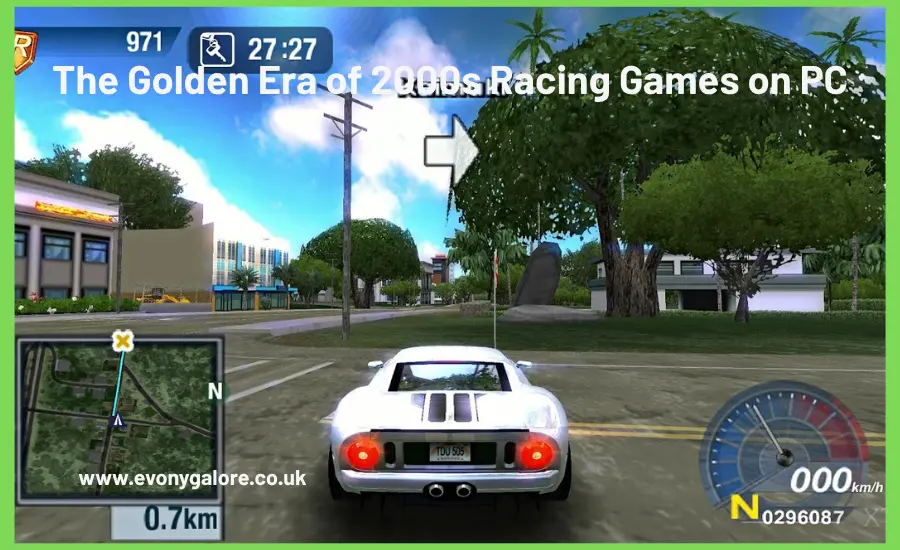
The Golden Era of 2000s Racing Games on PC: A Comprehensive Journey Through Digital Speed
The 2000s represented a transformative decade for racing games on PC, marking a period when technological advancements converged with creative innovation to produce some of the most memorable and influential racing titles in gaming history. This era witnessed the evolution from arcade-style simplicity to sophisticated simulation experiences, establishing benchmarks that continue to influence modern racing game development. The decade brought forth revolutionary graphics engines, advanced physics systems, and immersive gameplay mechanics that captivated millions of players worldwide and fundamentally changed how we experience virtual racing.
During this pivotal period, PC gaming emerged as the premier platform for racing enthusiasts seeking authentic driving experiences and cutting-edge visuals. The platform’s superior hardware capabilities allowed developers to push boundaries in ways that console systems of the time simply couldn’t match. From the gritty underground street racing scenes to professional circuit competitions, from rally stages carved through treacherous terrain to high-octane arcade action, the 2000s racing games on PC offered unprecedented diversity and depth. This comprehensive exploration delves into the defining characteristics, landmark titles, technological innovations, and lasting legacy of this extraordinary decade in PC racing game history.
- The Technical Revolution That Defined 2000s Racing Games
- Landmark Racing Titles That Shaped the Decade
- Arcade Excellence and Innovative Gameplay Concepts
- Racing Game Diversity: Genres and Subgenres of the 2000s
- The Cultural Impact and Legacy of 2000s Racing Games
- The Modding Revolution and Community-Driven Content
- Peripheral Hardware Evolution: Wheels, Pedals, and Immersion
- Conclusion:
The Technical Revolution That Defined 2000s Racing Games
The technological landscape of the 2000s fundamentally transformed how racing games were developed, played, and experienced on PC platforms. At the decade’s beginning, graphics cards were transitioning from basic 3D acceleration to sophisticated rendering capabilities that could handle complex lighting models, realistic reflections, and detailed environmental effects. Games like Need for Speed: Underground, released in 2003, showcased revolutionary visual techniques including dynamic lighting systems that brought nocturnal city streets to life with neon glow and realistic headlight beams cutting through darkness. The progression from DirectX 8 to DirectX 9 and eventually DirectX 10 throughout the decade enabled developers to implement shader effects, bump mapping, and high-dynamic-range rendering that created increasingly photorealistic racing environments.
Physics engines underwent equally dramatic evolution during this period, moving from simplified arcade-style handling to authentic vehicle dynamics that replicated real-world automotive behavior with remarkable accuracy. Simulations like GTR and GTR 2, developed by SimBin, incorporated tire wear modeling, fuel consumption calculations, and aerodynamic effects that affected vehicle performance in ways that mirrored actual racing conditions. The introduction of sophisticated suspension modeling meant that every bump, curb, and surface change translated into tangible feedback through the vehicle’s handling characteristics. Force feedback technology for steering wheels matured significantly, allowing players to feel road texture, tire grip levels, and weight transfer through their peripheral devices, creating an unprecedented level of immersion that blurred the line between virtual racing and real-world driving experiences.
Online multiplayer capabilities expanded dramatically throughout the 2000s, transforming racing games from primarily solitary experiences into vibrant competitive communities. Broadband internet adoption enabled smooth, lag-free racing with competitors around the globe, while dedicated server infrastructure supported persistent racing leagues and championships. Games like TrackMania Nations Forever created entirely new paradigms for competitive racing, offering free-to-play models supported by user-generated content and time-trial competitions that attracted millions of players. The integration of leaderboards, replay systems, and spectator modes fostered competitive ecosystems where players could study racing lines, learn techniques from elite drivers, and participate in organized tournaments that rivaled traditional esports competitions in their sophistication and popularity.
Landmark Racing Titles That Shaped the Decade
Need for Speed Series: Underground to Shift
The Need for Speed franchise underwent its most dramatic transformation during the 2000s, evolving from its exotic car showcase roots into a cultural phenomenon that defined street racing gaming. Need for Speed: Underground, released in 2003, captured the zeitgeist of automotive customization culture, allowing players to modify everything from body kits and paint schemes to performance components and nitrous oxide systems. The game’s career mode immersed players in an underground racing narrative complete with SMS messaging, garage progression, and increasingly challenging opponents that created genuine investment in the storyline. Underground 2 expanded this formula with an open-world city environment that players could freely explore between races, discovering hidden events, shopping for upgrades, and building their reputation within the virtual street racing community.
The series continued its evolution with Need for Speed: Most Wanted in 2005, which introduced police pursuit mechanics that transformed every race into a high-stakes cat-and-mouse game with law enforcement. The blacklist system created a hierarchical progression where players challenged increasingly skilled rivals, winning their vehicles and climbing toward the ultimate confrontation with the most wanted racer in the city. Carbon brought canyon racing and territorial gang warfare into the mix, while ProStreet shifted toward sanctioned racing events with damage modeling and circuit-based competition. The decade concluded with Shift in 2009, which attempted to bridge arcade accessibility with simulation authenticity, featuring a first-person helmet camera perspective and aggressive driving mechanics that rewarded spectacular overtakes and precise racing lines with experience points and career advancement.
The Simulation Masterpieces: GTR, rFactor, and Richard Burns Rally
For enthusiasts seeking uncompromising realism, the 2000s produced simulation titles that set new standards for authenticity and depth. GTR: FIA GT Racing Game, released in 2005, delivered the most comprehensive GT racing simulation available at the time, featuring officially licensed cars and tracks from the FIA GT Championship alongside a physics model that demanded respect for vehicle dynamics, tire management, and racing etiquette. The game’s career mode replicated the structure of actual racing seasons, complete with practice sessions, qualifying rounds, and endurance races that tested both driving skill and strategic thinking regarding pit stops, fuel management, and tire compound selection. GTR 2 refined this formula further, adding weather dynamics, day-night transitions, and expanded car rosters that included historic GT and touring car classes spanning multiple decades of motorsport history.
rFactor, released by Image Space Incorporated in 2005, took a different approach by creating a modifiable simulation platform that empowered the community to create custom content. The game’s sophisticated physics engine could be adjusted through detailed configuration files, allowing for accurate recreation of virtually any racing series or vehicle type. This openness spawned thousands of user-created mods that transformed rFactor into multiple racing simulations within a single framework, from Formula One recreations to historic Can-Am cars, from modern prototypes to vintage touring cars. The modding community produced tracks laser-scanned from real circuits, vehicle models researched through technical documentation, and complete championship packages that rivaled official licensed products in their attention to detail and authenticity.
Richard Burns Rally, released in 2004, stands as arguably the most realistic rally simulation ever created, capturing the unique challenges of stage rally competition with unprecedented fidelity. The game modeled the dramatic differences between tarmac, gravel, snow, and mud surfaces, requiring drivers to adjust their techniques constantly and maintain concentration through stages lasting ten minutes or longer without checkpoints or restarts. Co-driver pace notes delivered through synthesized speech provided essential information about upcoming corners, hazards, and surface changes, replicating the critical communication that defines real rally racing. The game’s difficulty curve was notoriously steep, with vehicles that demanded smooth inputs and careful weight transfer management, punishing aggressive driving with spins, crashes, and mechanical failures that could end rally stages or entire events.
Arcade Excellence and Innovative Gameplay Concepts
While simulation titles pushed toward maximum realism, arcade-style racing games flourished by prioritizing immediate fun and spectacular action over authentic vehicle physics. FlatOut and its superior sequel FlatOut 2 combined racing with vehicular mayhem, featuring destructible environments where fences splintered, barrels exploded, and entire buildings collapsed under vehicular impact. The ragdoll physics applied to drivers created hilarious and spectacular crashes where unfortunate racers launched through windshields, tumbling across tracks in exaggerated fashion that added comic relief to intense competition. Mini-games capitalized on this physics system with events like “Stone Skipping” and “High Jump” where players deliberately launched their drivers from vehicles to achieve maximum distance or height, creating absurd entertainment that contrasted sharply with the serious racing action.
TrackMania, first released in 2003 and expanded throughout the decade with multiple iterations, invented an entirely new racing paradigm focused on time trials and track creation rather than traditional competitive racing. The game’s physics model emphasized momentum conservation and spectacular aerial maneuvers, encouraging players to discover optimal racing lines through tracks that defied conventional design with loop-de-loops, vertical drops, and gravity-defying jumps. The integrated track editor allowed anyone to create and share racing challenges, resulting in millions of user-generated courses ranging from technical precision tests to absurd contraptions that pushed the game’s physics engine to its limits. The emphasis on ghost racing against recorded runs rather than direct competition eliminated the chaos of contact racing, focusing attention purely on perfecting driving technique and discovering faster approaches through creative experimentation.
Burnout Paradise, released in late 2008, redefined open-world racing with its seamless integration of exploration and competition within the fictional Paradise City. Rather than selecting events from menus, players discovered races by pulling up to traffic lights and initiating challenges organically within the game world. The absence of traditional tracks meant that route selection became a strategic consideration, with multiple paths available between starting points and destinations, rewarding geographic knowledge and creative thinking. The game’s signature crash mechanics transformed vehicular destruction into spectacular slow-motion sequences showcasing crumpling metal and shattering glass with cinematic flair, while the Showtime mode allowed players to deliberately crash their vehicles to cause maximum monetary damage to surrounding traffic and property, turning destruction into a competitive scoring challenge.
Racing Game Diversity: Genres and Subgenres of the 2000s
Street Racing and Customization Culture
The following titles exemplified different approaches to street racing themes throughout the decade:
- Midnight Club series: Emphasized arcade handling and open-world exploration through recreations of real cities like Los Angeles, Tokyo, and Atlanta, featuring special abilities like agro mode for aggressive driving and zone mode for slow-motion maneuvering through traffic
- Juiced: Focused heavily on crew racing dynamics where respect and reputation determined access to better vehicles and events, incorporating pink slip racing where players could wager their cars against opponents
- Street Racing Syndicate: Combined racing with relationship-building mechanics where players pursued romantic interests alongside automotive pursuits, though gameplay ultimately focused on traditional street racing events
- Tokyo Xtreme Racer series: Captured the Japanese highway racing culture through expressway battles against rival teams, featuring unique health bar systems where opponents were defeated by maintaining leads rather than reaching finish lines
Circuit Racing and Professional Motorsport
The 2000s produced exceptional titles representing various forms of professional racing competition. TOCA Race Driver series, rebranded as Race Driver in later installments, delivered touring car racing with career narratives following driver Ryan McKane through various motorsport disciplines. The games incorporated authentic damage modeling where mechanical failures could end races prematurely, alongside mixed discipline championships that tested adaptability across different vehicle types and racing formats. Formula One games throughout the decade attempted to capture the pinnacle of motorsport with varying success, though technical limitations and licensing complications often prevented developers from fully realizing the sport’s complexity and prestige.
NASCAR Racing 2003 Season, developed by Papyrus Design Group, achieved legendary status among oval racing enthusiasts through its sophisticated physics modeling and authentic representation of stock car racing’s unique challenges. The game accurately portrayed the importance of drafting on superspeedways, the significance of chassis setup for different track types, and the strategic complexity of pit stop timing and tire management across 500-mile races. Despite its 2003 release date, the game remained actively played and modded throughout the entire decade and beyond, with community-created content keeping it relevant long after official support ended, testament to its fundamental excellence and the dedication of its player base.
The Cultural Impact and Legacy of 2000s Racing Games
The racing games of the 2000s transcended mere entertainment software to become cultural touchstones that influenced automotive enthusiasm, popular music, and gaming culture broadly. The Need for Speed Underground games particularly impacted car modification culture, introducing millions of players to aftermarket components, performance tuning concepts, and aesthetic customization possibilities they might never have encountered otherwise. The games featured soundtracks curating the era’s popular music across hip-hop, electronic, and rock genres, with artists like Snoop Dogg, Static-X, and The Crystal Method providing adrenaline-fueled accompaniment to high-speed pursuits. These soundtracks achieved independent popularity, with many players discovering favorite artists through racing game exposure, demonstrating how gaming soundtracks could influence musical taste and promote artists to engaged audiences.
The decade also witnessed racing games becoming legitimate training tools for aspiring professional drivers, with several notable cases of gamers transitioning to real-world motorsport careers. Programs like GT Academy, though primarily associated with console gaming, validated the transferable skills developed through racing simulation, proving that virtual practice could develop spatial awareness, reaction times, and racing strategy applicable to actual competition. The proliferation of force feedback steering wheels, pedal sets, and eventually full motion simulators created pathways for serious enthusiasts to develop genuine driving skills without the prohibitive costs of track time and vehicle ownership, democratizing motorsport training in unprecedented ways.
Technical Specifications Comparison: Key Racing Games of the 2000s
| Game Title | Release Year | Graphics Engine | Physics Model | Multiplayer Support | Key Innovation |
| Need for Speed Underground | 2003 | Custom EA Engine | Arcade-Oriented | LAN/Online (8 players) | Visual customization depth |
| GTR 2 | 2006 | Gmotor2 Engine | Advanced Simulation | Online (16 players) | Dynamic weather and time |
| rFactor | 2005 | gMotor Engine | Highly Modifiable | Online (variable) | Community mod platform |
| Richard Burns Rally | 2004 | Custom Engine | Rally Simulation | Online (2 players) | Authentic stage rally physics |
| TrackMania Nations | 2006 | Custom Engine | Momentum-Based Arcade | Online (hundreds) | User-generated content focus |
| Race Driver: GRID | 2008 | EGO Engine | Balanced Sim/Arcade | Online (12 players) | Flashback rewind system |
The Modding Revolution and Community-Driven Content
The open architecture of many 2000s racing games on PC fostered unprecedented modding communities that extended game longevity far beyond developers’ original visions. Games like rFactor, GTR 2, and NASCAR Racing 2003 Season became platforms rather than merely finished products, with dedicated enthusiasts creating total conversion mods that effectively produced entirely new racing simulations. These community creators often demonstrated extraordinary commitment, spending thousands of hours researching vehicle specifications, modeling accurate 3D representations, and testing physics parameters to achieve authentic behavior. The resulting mods frequently surpassed official DLC and expansion packs in quality and attention to detail, driven by passion rather than commercial constraints.
This modding culture created lasting value for players, who could continuously discover fresh content years after games’ initial releases. A single racing simulation could transform into dozens of different experiences through mod installations, hosting Formula One championships one day, vintage Can-Am sports cars the next, and modern GT3 racing the following week. The community sharing infrastructure, primarily through dedicated forums and file-sharing platforms, fostered collaborative environments where creators received feedback, troubleshooting assistance, and encouragement from appreciative users. This ecosystem demonstrated the profound value of developer openness and community empowerment, lessons that unfortunately became increasingly rare as gaming moved toward more restrictive digital distribution models and proprietary engines in subsequent decades.
Peripheral Hardware Evolution: Wheels, Pedals, and Immersion
The 2000s marked significant advancement in racing game peripheral hardware, with force feedback steering wheels evolving from expensive novelties to mainstream accessories that fundamentally enhanced racing simulation experiences. Manufacturers like Logitech, Thrustmaster, and Fanatec competed to deliver increasingly sophisticated products featuring stronger motors, more precise sensors, and additional controls that replicated real vehicle interfaces. The Logitech G25, released in 2006, became iconic for offering a complete three-pedal set including clutch, six-speed H-pattern shifter, and 900-degree rotation capability at a price point accessible to enthusiastic hobbyists rather than exclusively professional applications. This accessibility breakthrough allowed thousands of players to experience realistic gear-changing mechanics and proper heel-toe downshift techniques, dramatically improving immersion and engagement.
Pedal technology similarly advanced throughout the decade, progressing from simple potentiometer-based designs to load cell brake pedals that measured pressure rather than distance, more accurately replicating actual braking feel and control. High-end solutions introduced hydraulic damping and adjustable resistance, allowing users to customize pedal feel to match personal preferences or replicate specific vehicle characteristics. The integration of clutch pedals with properly simulated clutch mechanics in games created new layers of challenge and satisfaction, rewarding smooth engagement and punishing improper technique with stalls and missed shifts. By decade’s end, complete cockpit solutions incorporating racing seats, monitor stands, and integrated peripheral mounting had evolved from custom DIY projects to commercially available products, enabling dedicated enthusiasts to create home racing environments rivaling professional training simulators in their immersive qualities.
Conclusion:
The 2000s racing games on PC established foundations that continue influencing modern racing game development nearly two decades later. This remarkable decade balanced technological innovation with creative experimentation, producing titles that ranged from accessible arcade experiences to uncompromising simulations, ensuring that racing games could satisfy virtually every preference and skill level. The period’s greatest legacy extends beyond individual titles to encompass the philosophies and approaches that defined the era: community empowerment through modding support, diverse gameplay styles coexisting within the broader racing genre, and continuous technical advancement pushing hardware capabilities to their limits.
Looking back, the 2000s represent a unique moment when PC racing games achieved critical mass in terms of quality, variety, and cultural relevance. The decade produced timeless classics that players continue enjoying through emulation, compatibility patches, and active modding communities that refuse to let these treasured experiences fade into obsolescence. For anyone seeking to understand racing game history or experience the titles that established the genre’s foundations, exploring the 2000s racing games on PC remains not merely an exercise in nostalgia but an opportunity to engage with genuinely excellent games that, in many cases, have aged remarkably well and continue offering entertainment, challenge, and satisfaction that modern titles sometimes struggle to match. The golden era of 2000s PC racing games created memories, fostered communities, and delivered experiences that shaped an entire generation of gaming enthusiasts, ensuring its influence will persist for decades to come.